Iran's Resilience: Rapidly Restoring Bombed Missile Bunkers Amid Ongoing Conflict
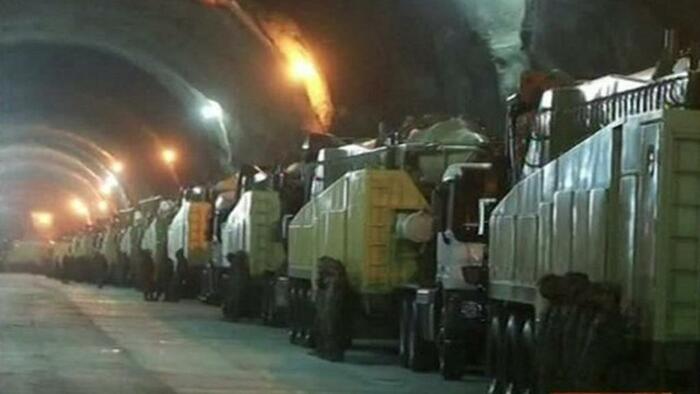
The ongoing conflict between Iran and the US-Israeli alliance has underscored the Islamic Republic's capacity for resilience in the face of heavy bombardment. Despite more than a month of intense bombing, which has significantly debilitated its air force and navy, Iran has managed to maintain a robust offensive capability, particularly through its ballistic missile and drone strikes. Tehran's missile arsenal, long considered formidable, continues to pose a significant challenge to its adversaries.
According to recent assessments by US intelligence, Iranian personnel are engaged in rapid restoration efforts, excavating and repairing bombed underground missile bunkers and silos within hours of being struck. This quick turnaround has raised doubts about the effectiveness of the US-Israeli strategy aimed at crippling Iran's missile capabilities. The New York Times has cited American intelligence analysis indicating that Tehran retains a substantial number of missiles and mobile launchers, despite the relentless bombing campaign.
The challenge in gauging the success of these strikes lies in Iran's deployment of decoys, making it difficult for Washington to determine the actual number of launchers destroyed. The strategy of using decoys, combined with the rapid excavation and recovery of launchers from rubble, has allowed Iran to maintain its missile launch capability. A senior Western official noted that Iran is firing approximately 15-30 ballistic missiles and 50-100 suicide drones per day across the region, highlighting the ongoing threat posed by Tehran.
Anna Kelly, a White House spokeswoman, has sought to emphasize the achievements of the US-Israeli campaign, stating that Iranian ballistic missile and drone attacks are down 90 percent, and that Iran's navy has been effectively wiped out. However, the persistence of Tehran's missile strikes, enabled by its rapid restoration efforts, underscores the complexity of the conflict and the challenges facing the US and its allies.
The conflict has also had significant humanitarian implications, with Iranian missiles continuing to target Israel, forcing citizens to spend hours in shelters, particularly in central Israel and Tel Aviv. The ongoing nature of these attacks, despite the bombing campaign, points to the resilience of Iran's military infrastructure and its determination to preserve its missile launch capability as a key component of its defense strategy.
Historically, Iran's missile program has been a point of contention, with the country developing its capabilities over the years as a deterrent against potential threats. The current conflict highlights the importance of this capability to Tehran, which aims to maintain its position in the region. The rapid restoration of bombed missile bunkers reflects Iran's commitment to its military strategy, posing a significant challenge to the US and its allies in their efforts to degrade Tehran's military capabilities.
As the situation continues to unfold, the ability of Iran to restore its missile capabilities will remain a critical factor in the conflict. The use of advanced weaponry, including bunker busters, has not fully neutralized Iran's missile threat, indicating that a comprehensive approach will be required to address the complexities of the region and the resilience of Iran's military infrastructure.
Summary Points
Iran rapidly restores bombed missile bunkers within hours of US-Israeli strikes.
Tehran retains a significant number of missiles and mobile launchers despite the bombing campaign.
Iran's use of decoys complicates assessments of the effectiveness of US-Israeli strikes.
The conflict has significant humanitarian implications, with ongoing missile strikes forcing civilians into shelters.
Iran's missile program is a critical component of its defense strategy, reflecting its commitment to maintaining regional influence.