U.S.-China Economic Ties Shift into High Gear: The Marshall Plant Story
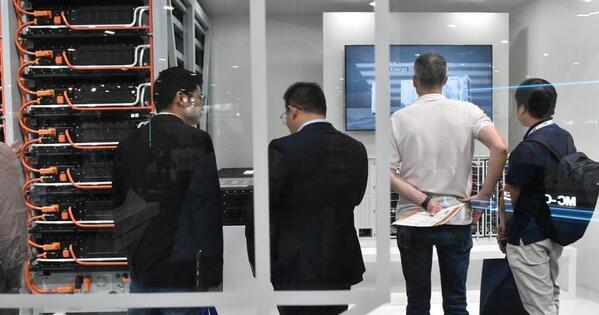
The city of Marshall, Michigan, is witnessing a transformation that symbolizes the evolving economic landscape between the United States and China. This small town, with a population of approximately 7,000, is now home to Ford Motor Co.'s BlueOval Battery Park Michigan, a $3 billion lithium iron phosphate (LFP) battery plant scheduled for completion in the early summer of 2026.
The nearly mile-long facility, spanning two million square feet of gray steel and concrete, signifies a pivotal moment in U.S.-China economic ties. It embodies the concept of 'coopetition' - a term that describes the collaboration between two entities that are otherwise competitors. In this context, Ford Motor Co. and Contemporary Amperex Technology Co. Limited (CATL) of China, the world's largest battery manufacturer, have formed a unique partnership.
The partnership is built on the licensing of CATL's LFP battery technology to Ford, enabling the U.S. automaker to produce batteries at a commercial scale. This collaboration is critical for Ford, given the current lack of domestic capacity for commercial-scale LFP batteries in the United States. The origins of LFP batteries date back to the late 1990s in U.S. labs, but it was Chinese firms that successfully commercialized and scaled the technology.
The BlueOval Battery Park Michigan plant is expected to create 1,700 permanent jobs and generate over $2 million annually in property tax revenue, serving as a significant economic boost for the local community. According to Mayor Scott Wolfersberger, 'The future of Marshall looks better today than it has in 40 years.' The positive impact of the plant is already being felt, with new hotels and businesses revitalizing the downtown area.
The unique structure of the partnership between Ford and CATL stems from an uncomfortable reality: the substantial lead that China has in the development and production of LFP batteries. This disparity necessitates a carefully constructed legal arrangement, particularly in terms of technology licensing. Ford's CEO, Jim Farley, has acknowledged China's lead in this area, while Lisa Drake, Ford's VP of technology platform programs, emphasized the need to license LFP technology from a Chinese company to avoid infringement.
The legislative battles in 2025 posed an existential threat to the Marshall project, with the initial versions of the FY2025 budget reconciliation law threatening to strip production credits from any facility licensing technology from a 'prohibited foreign entity.' Ford lobbied intensely, highlighting the importance of these credits as a 'lifeline' for the project. The final Senate version adopted an approach that accommodated the needs of the Marshall project, ensuring its viability.
The story of the Marshall plant serves as a powerful example of the evolving nature of U.S.-China economic ties. It demonstrates that cooperation and competition can coexist, even in highly competitive industries like electric vehicles. As the world transitions towards a more sustainable and environmentally friendly transportation system, the partnership between Ford and CATL is poised to play a significant role in shaping the future of the automotive industry.
In conclusion, the BlueOval Battery Park Michigan plant represents a significant milestone in the development of U.S.-China economic ties. It underscores the importance of cooperation and collaboration in driving innovation and growth, even in the face of intense competition. As the world continues to navigate the complexities of the 21st-century economy, the story of the Marshall plant will undoubtedly serve as a valuable case study for policymakers, business leaders, and scholars alike.
Summary Points
The BlueOval Battery Park Michigan plant is a $3 billion lithium iron phosphate (LFP) battery facility scheduled for completion in the early summer of 2026.
The partnership between Ford and CATL is an example of 'coopetition,' where two competitors collaborate to achieve mutual benefits.
The plant is expected to create 1,700 permanent jobs and generate over $2 million annually in property tax revenue, serving as a significant economic boost for the local community.
China's substantial lead in the development and production of LFP batteries necessitates a carefully constructed legal arrangement, particularly in terms of technology licensing.
The story of the Marshall plant highlights the importance of cooperation and collaboration in driving innovation and growth, even in the face of intense competition.
