Unveiling the Mysteries of Asteroid Bennu: Ancient Water Channels and Preserved Chemistry
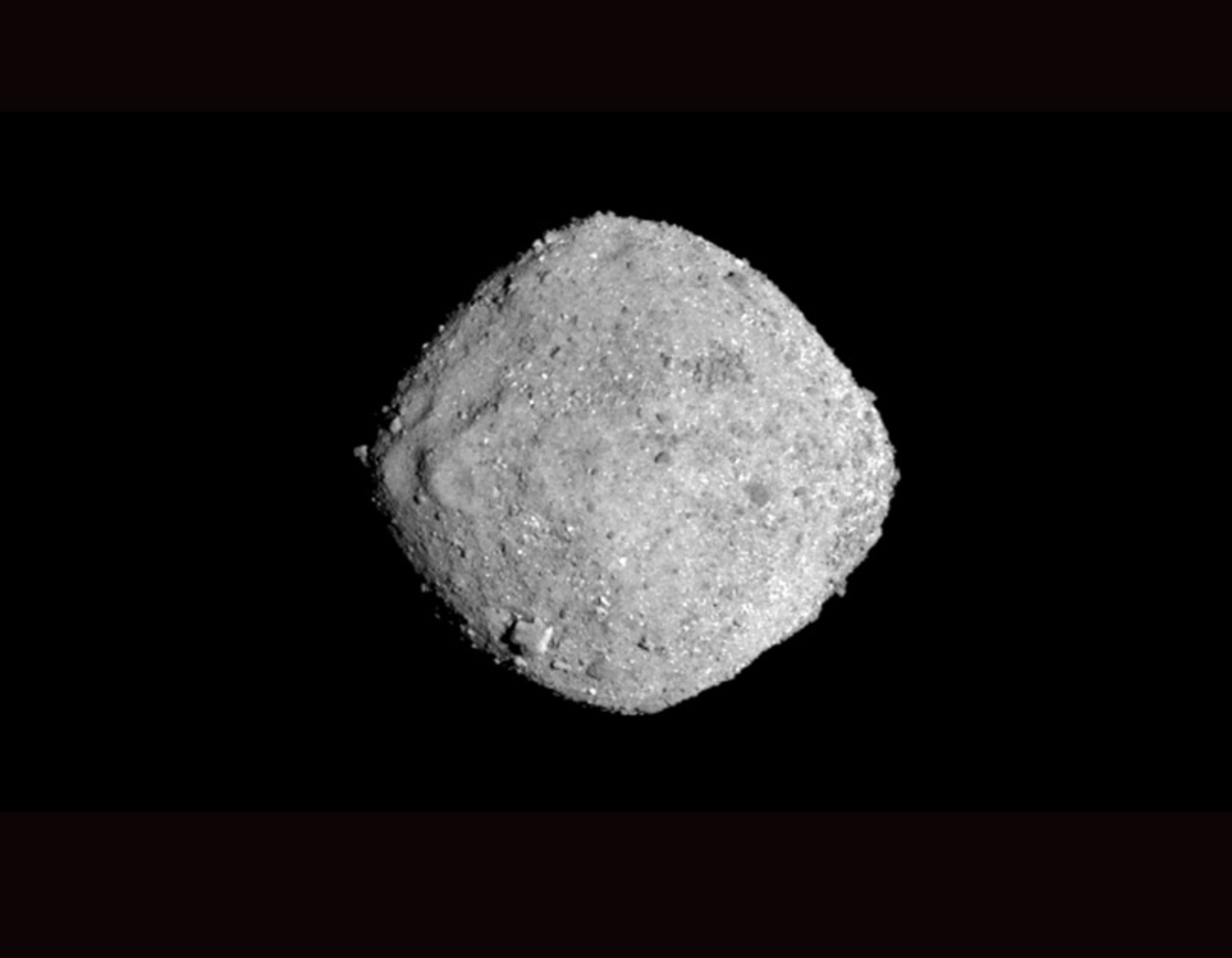
A groundbreaking analysis of samples from asteroid Bennu has revealed a fascinating history of water movement on the asteroid, with narrow channels carving its material into three sharply separated chemical zones. This hidden pattern has helped explain how fragile carbon-based materials survived in some pockets while minerals formed in others, preserving a more detailed record of Bennu's past.
The samples, analyzed by Professor Mehmet Yesiltas and colleagues at Stony Brook University, showed distinct boundaries at an almost unimaginably small scale, where neighboring patches held very different chemistry. By matching the split pattern to water that had altered some areas and left others largely untouched, the team discovered that the sample preserved distinct pockets that record different stages of Bennu's history.
The NASA's OSIRIS-REx mission, which returned material from the asteroid Bennu to Earth on September 24, 2023, provided scientists with direct access to its original chemistry. Unlike meteorites, the OSIRIS-REx sample did not need to survive a fiery atmospheric plunge before scientists could open it, reducing the chances of Earth's air and moisture rewriting the chemistry.
Across the sample, researchers found three recurring zones instead of one blended mixture of rock and carbon-based material. One part of the sample held simple carbon chains, while another was packed with mineral material that had formed in the presence of water. A third area preserved a different kind of carbon-rich material that tends to break down when water exposure lasts too long.
A clearer signal came from sulfur-linked material that showed up almost entirely in the mineral-rich areas. In those spots, water had once moved through and left behind dissolved material as it settled. In contrast, other areas kept their original chemistry because the water either missed them or passed through too lightly to cause any change.
The findings carry broader significance for planetary science and astrobiology, as they suggest that small bodies like Bennu may have transported ingredients for life without erasing them first. The discovery of ancient water channels on Bennu also sheds light on the asteroid's formation history, suggesting that it was shaped in several watery environments instead of one simple, body-wide episode.
Earlier studies of Bennu had uncovered salts left by an ancient brine, salty water loaded with dissolved material. The new map explains why some microscopic neighborhoods had different chemistry than others. Salt deposits fit a larger earlier asteroid that held liquid only in certain places and at certain times.
The results of this study have significant implications for our understanding of the early solar system and the origins of life on Earth. The preservation of fragile nitrogen-rich chemistry on Bennu suggests that small bodies like asteroids may have played a crucial role in transporting ingredients for life to other planets.
In conclusion, the analysis of the Bennu samples has revealed a fascinating history of water movement on the asteroid, with implications for our understanding of the early solar system and the origins of life. As scientists continue to study the samples and learn more about the asteroid's history, we may uncover even more secrets about the formation and evolution of our solar system.
Summary Points
Asteroid Bennu samples reveal signs of ancient water channels and preserved chemistry
The samples show distinct boundaries at a small scale, with neighboring patches holding different chemistry
The NASA's OSIRIS-REx mission provided scientists with direct access to the asteroid's original chemistry
The findings carry broader significance for planetary science and astrobiology, suggesting that small bodies may have transported ingredients for life
The discovery of ancient water channels on Bennu sheds light on the asteroid's formation history and the origins of life on Earth
