Cauvery Water Dispute Escalates: Karnataka to Challenge Tamil Nadu's Plea in Supreme Court
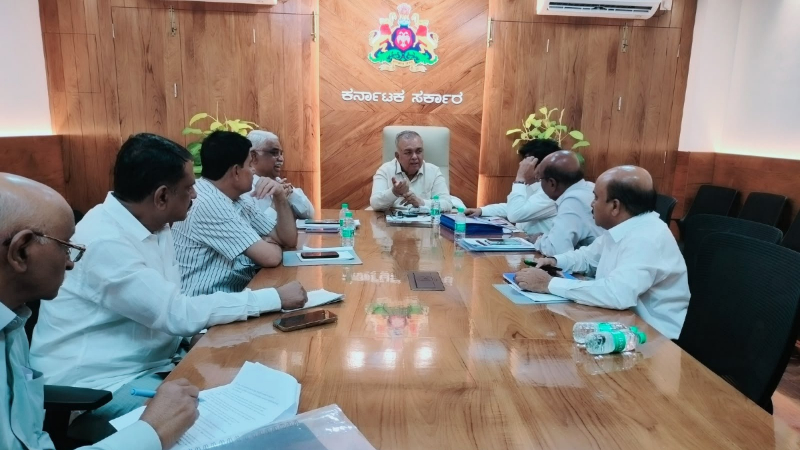
The ongoing Cauvery water dispute between Karnataka and Tamil Nadu has taken a new turn, with Karnataka's Water Resources Minister Ramalinga Reddy directing officials to challenge a petition filed by the Tamil Nadu government in the Supreme Court. The petition alleges that Karnataka has violated the Cauvery Water Management Authority (CWMA) order by not releasing the mandated share of water to Tamil Nadu.
According to Minister Reddy, the state government will file an appeal against Tamil Nadu's petition, citing that the dams in Karnataka are already full and excess water is currently flowing out and reaching Tamil Nadu. This development comes amid ongoing disputes between the two states over the sharing of Cauvery water and compliance with CWMA directives.
The Cauvery water dispute is a long-running inter-state river water-sharing conflict between Karnataka and Tamil Nadu, with the two states being the principal parties. The dispute revolves around how the waters of the Cauvery River should be shared, particularly during years of low rainfall. The Cauvery River originates in Karnataka and flows through Tamil Nadu before emptying into the Bay of Bengal.
The CWMA, which is responsible for managing the Cauvery River's water resources, had directed Karnataka to release 3,500 cusecs of water at Biligundlu from July 29 to August 12. However, Tamil Nadu claimed that the actual inflow at Biligundlu ranged only between 158 and 550 cusecs, far below the quantity ordered by the authorities.
As of August 2026, Karnataka's reservoirs held substantial water storage, including 23.078 TMC in the Krishna Raja Sagar (KRS) reservoir, 18.610 TMC in Kabini, 7.827 TMC in Harangi, and 28.022 TMC in Hemavathi. The total storage was 77.537 TMC, with a usable storage of 67.517 TMC. Tamil Nadu argued that Karnataka therefore faces no difficulty in releasing Tamil Nadu's due share of water on a proportionate basis.
The Cauvery water dispute has a long history, dating back to the 19th century when the British East India Company built a dam across the Cauvery River to irrigate the plains of Tamil Nadu. The dispute gained prominence in the 1990s, with both states claiming ownership of the river's waters. In 2018, the Supreme Court delivered a verdict, allocating 404.25 TMC of water to Tamil Nadu and 284.75 TMC to Karnataka.
The ongoing dispute highlights the need for a more effective and sustainable solution to the Cauvery water sharing issue. With the monsoon season approaching, the two states must work together to find a mutually beneficial solution that ensures the equitable distribution of the Cauvery River's waters. The outcome of the Supreme Court case will be closely watched, as it will have significant implications for the future of the Cauvery water dispute.
Summary Points
Karnataka to challenge Tamil Nadu's plea in the Supreme Court over Cauvery water release
Tamil Nadu alleges that Karnataka has violated the Cauvery Water Management Authority (CWMA) order
Karnataka's reservoirs hold substantial water storage, with a total storage of 77.537 TMC
The Cauvery water dispute has a long history, dating back to the 19th century
The Supreme Court's verdict in 2018 allocated 404.25 TMC of water to Tamil Nadu and 284.75 TMC to Karnataka
