Delhi-NCR Sets Sights on Electric Revolution: CAQM Unveils Draft Policy for Cleaner Transport
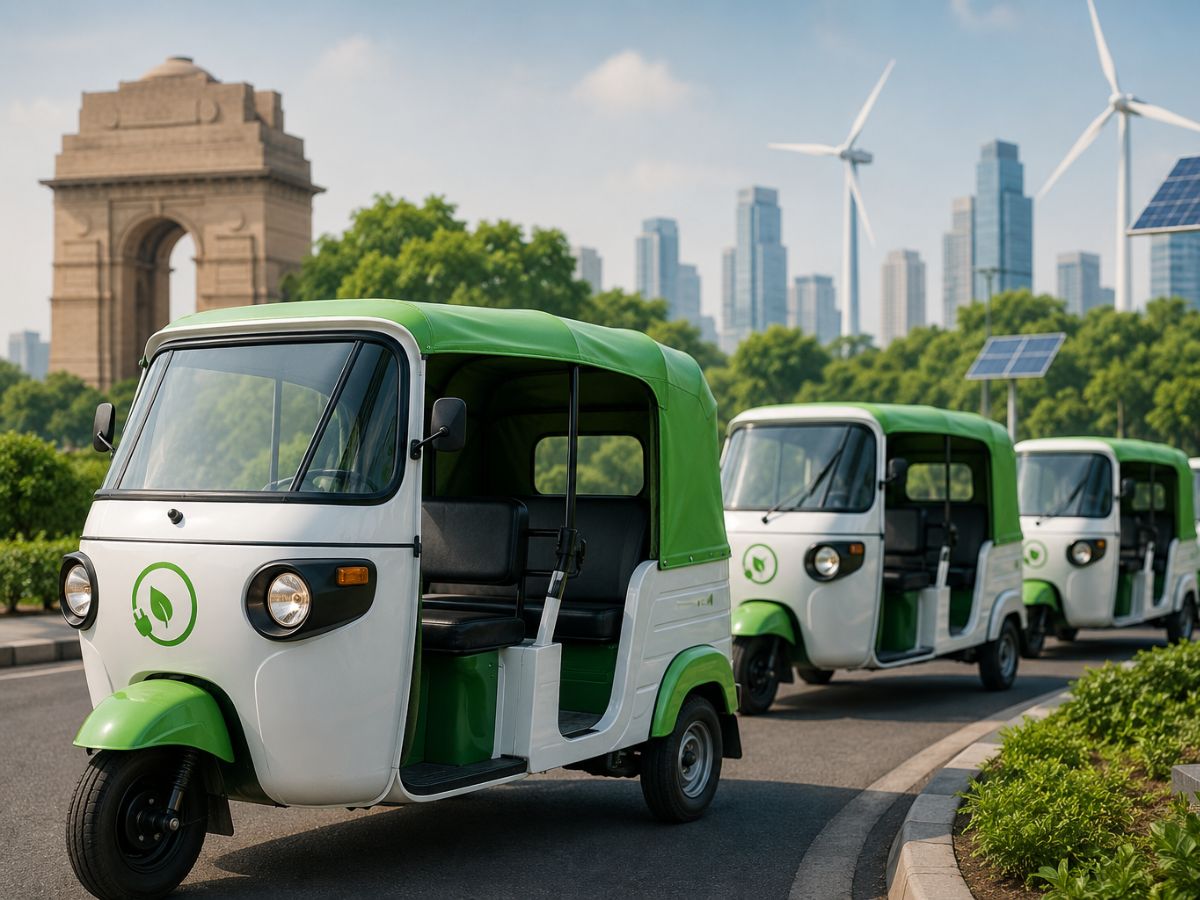
In a significant move towards reducing air pollution, the Commission for Air Quality Management (CAQM) has approved a draft policy that paves the way for a major shift towards electric vehicles in Delhi-NCR. Starting from January 1, 2027, only electric three-wheelers in the L5 category will be allowed to be registered in Delhi, marking a crucial step towards mitigating the region's pollution woes.
The L5 category comprises three-wheelers that are designed to carry passengers and goods, with the capability to run faster than 25 kmph, and weighing less than 1,500 kg. Currently, these vehicles can operate on electricity, petrol, or diesel. However, with the new policy, only electric three-wheelers will be registered in Delhi from 2027 onwards, with the rule expanding to other busy districts like Gurgaon, Faridabad, Ghaziabad, and Noida from January 1, 2028, and to the remaining NCR districts from January 1, 2029.
The CAQM's decision is grounded in a recent report by air quality experts, which highlights vehicles as one of the primary sources of PM2.5 pollution in Delhi-NCR. The report underscores the urgent need to transition towards cleaner and less-polluting transport options. In response, the commission has approved several draft rules aimed at reducing pollution from transport, farming, and industries, emphasizing the importance of collective action to address the region's environmental challenges.
One of the key proposals approved by the CAQM is the introduction of stricter restrictions on vehicles that cause pollution, coupled with stronger action to stop stubble burning. The commission has also given a nod to a proposal that requires petrol pumps across NCR to dispense fuel only to vehicles equipped with a valid Pollution Under Control Certificate (PUCC) from October 1, 2026. This move is designed to minimize harmful pollution from vehicles, including PM2.5, nitrogen oxides, and carbon monoxide, which have severe implications for public health and the environment.
Furthermore, the CAQM has expressed concern over the rising incidence of wheat stubble burning in states like Punjab and Haryana. The commission has called for more stringent action to be taken by these states to curb this practice, which is a significant contributor to air pollution in the region. In a bid to address this issue, the CAQM has approved a revised action plan aimed at completely stopping paddy stubble burning in NCR states during the 2026 harvest season.
To bolster pollution tracking and monitoring, the commission has announced plans to set up 46 more Continuous Ambient Air Quality Monitoring Stations (CAAQMS) across Delhi-NCR. This expansion will increase the total number of monitoring stations to 157, enabling more effective surveillance and management of air quality in the region.
The introduction of the CAQM's draft policy and the slew of measures aimed at reducing pollution in Delhi-NCR marks a significant step forward in the region's fight against air pollution. As the world grapples with the challenges of environmental degradation and climate change, the importance of adopting sustainable and eco-friendly practices has never been more pressing. The shift towards electric vehicles and the implementation of stricter pollution controls are crucial components of this effort, and their impact will be closely watched in the months and years to come.
Summary Points
The CAQM has approved a draft policy allowing only electric three-wheelers in the L5 category to be registered in Delhi from January 1, 2027.
The policy aims to reduce air pollution in Delhi-NCR by transitioning towards cleaner and less-polluting transport options.
Stricter restrictions on vehicles that cause pollution and stronger action to stop stubble burning have been proposed.
Petrol pumps across NCR will be required to dispense fuel only to vehicles with a valid Pollution Under Control Certificate (PUCC) from October 1, 2026.
The CAQM has announced plans to set up 46 more Continuous Ambient Air Quality Monitoring Stations (CAAQMS) across Delhi-NCR to improve pollution tracking and monitoring.