Get Ready for a Rare Celestial Treat: Double Full Moons to Illuminate the Skies in May 2026
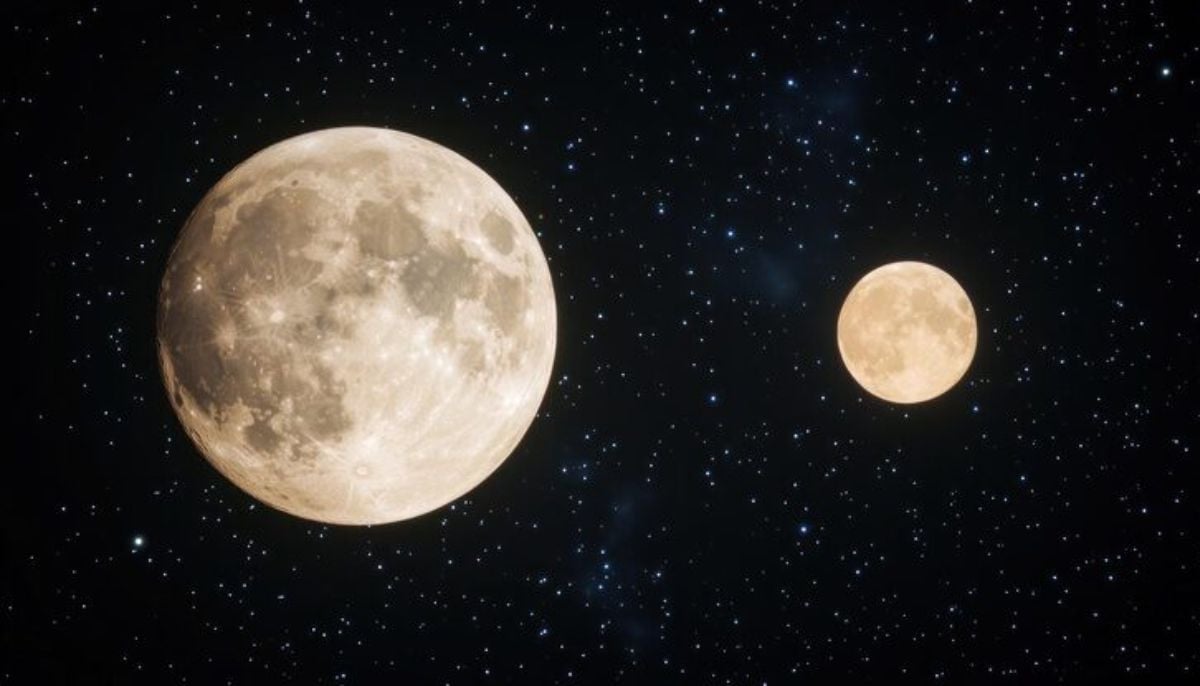
A rare and fascinating astronomical event is set to captivate skywatchers around the world in May 2026, as two full moons will appear in the same month. This extraordinary occurrence is a result of the lunar cycle and the way it aligns with the calendar. The first full moon, known as the Flower Moon, will peak on Friday, May 1, at 1:23 p.m. EDT, while the second full moon, referred to as a Blue Moon, will rise on Sunday, May 31, at 4:45 a.m. EDT.
The Flower Moon, also known as the May Flower Moon, gets its name from the numerous flowers that bloom across the Northern Hemisphere during springtime. This traditional name was given by the Algonquin Native Americans, who used the lunar cycle to keep track of the seasons. The Flower Moon is a significant event in many cultures, symbolizing growth, renewal, and abundance. As the moon reaches its peak, it will appear over the southeastern horizon around sunset, taking on a vivid yellow-orange hue due to Rayleigh scattering, a phenomenon that occurs when light interacts with the Earth's atmosphere.
On the same evening, Venus and Jupiter will be visible in the western sky, creating a spectacular celestial display. This alignment of planets and the full moon will provide a unique opportunity for stargazers to observe the night sky in all its glory. The combination of the Flower Moon, Venus, and Jupiter will create a breathtaking scene, with the moon's soft glow and the planets' bright light illuminating the darkness.
The Blue Moon, which occurs when there are two full moons in a single month, is a rare event that happens every 2.5 to 3 years. The last double moon event occurred in 2023, when the first full moon, known as the Sturgeon Moon, peaked on August 1, and the second full moon, also a Blue Moon, rose on August 30-31. The next double moon event will not occur until December 2028, making this event a unique and special experience for skywatchers.
The term 'Blue Moon' originated from the phrase 'once in a blue moon,' which refers to a rare and unexpected event. While the moon itself does not actually turn blue, the phrase has become synonymous with the occurrence of a second full moon in a single month. This event is a result of the lunar cycle, which is approximately 29.5 days long, and the calendar year, which is approximately 365.25 days long. The mismatch between the two cycles means that every few years, an extra full moon appears, resulting in the Blue Moon phenomenon.
In conclusion, the double full moons in May 2026 will be a rare and captivating spectacle, offering a unique opportunity for skywatchers to observe the night sky in all its glory. With the Flower Moon and the Blue Moon, this event will be a reminder of the awe-inspiring beauty of the celestial world and the importance of preserving our connection to the natural world. As we gaze up at the night sky, we are reminded of the infinite wonders that await us, and the magic that can be discovered in the simplest of things – a full moon rising in the darkness.
Summary Points
The Flower Moon will peak on Friday, May 1, at 1:23 p.m. EDT, and will appear over the southeastern horizon around sunset with a vivid yellow-orange hue
The Blue Moon will rise on Sunday, May 31, at 4:45 a.m. EDT, and is a rare event that happens every 2.5 to 3 years
The term 'Blue Moon' originated from the phrase 'once in a blue moon', which refers to a rare and unexpected event
The last double moon event occurred in 2023, and the next one will not occur until December 2028
The alignment of the Flower Moon, Venus, and Jupiter will create a spectacular celestial display, offering a unique opportunity for stargazers to observe the night sky