West Bengal's Arsenic Belt Exposed: 73% of Taps Supply Untreated Water
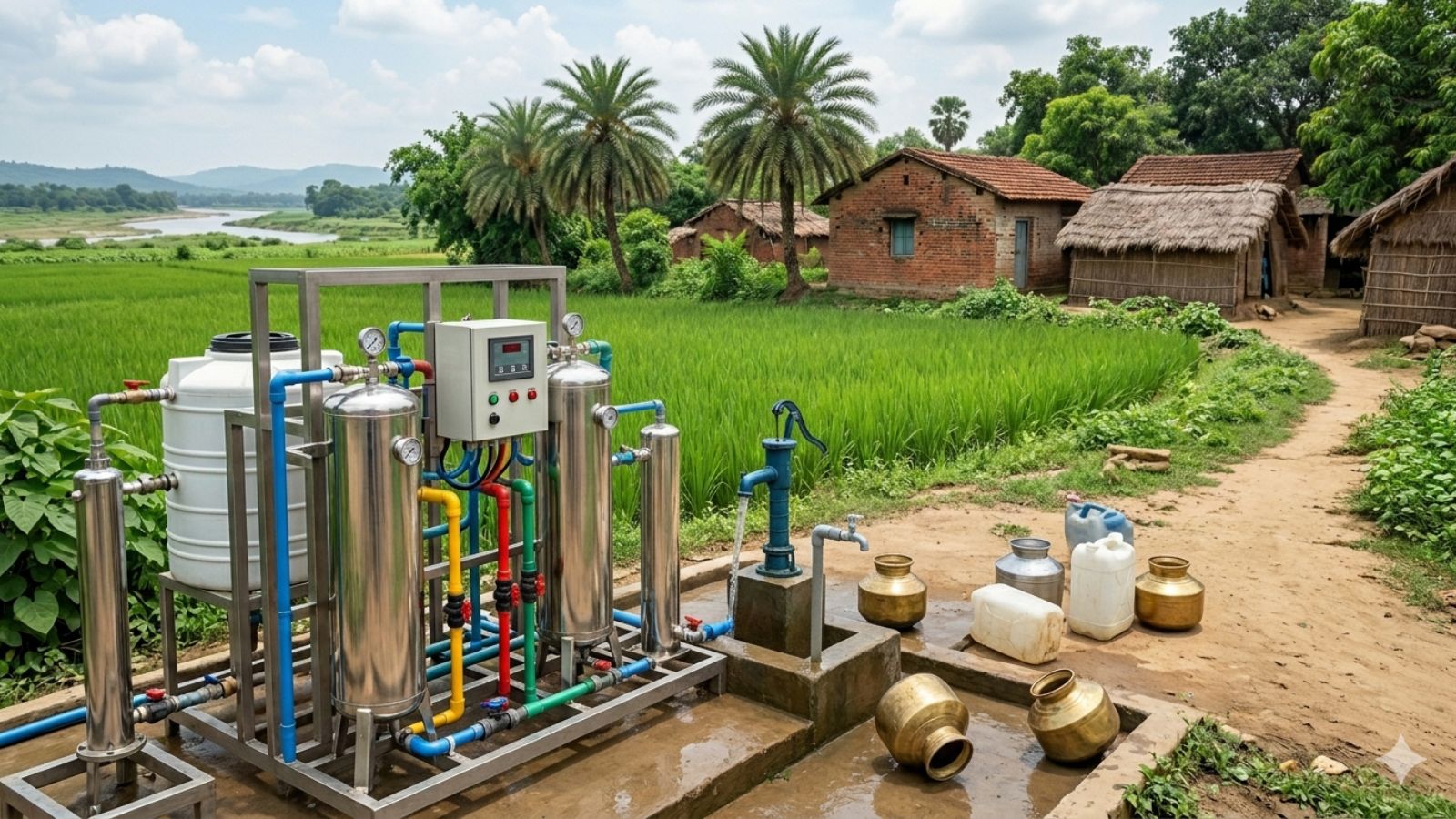
A disturbing report by the Comptroller and Auditor General (CAG) of India has shed light on the dire state of drinking water safety in West Bengal's arsenic-affected districts. The audit reveals that a staggering 73% of household tap connections in the districts of Nadia and North 24 Parganas supply raw, untreated groundwater directly into rural homes.
The Jal Jeevan Mission, a flagship program aimed at providing clean drinking water to all households, has been marred by the state's Public Health Engineering Department's (PHED) failure to install mandatory treatment infrastructure. Despite rapid expansion of pipelines, the department's inability to integrate arsenic-iron removal plants (AIRP) has put the health of millions at risk.
West Bengal's arsenic belt, which includes the districts of Nadia and North 24 Parganas, has long been plagued by the presence of toxic arsenic in groundwater sources. The CAG report exposes a critical operational gap in the PHED's implementation of the Jal Jeevan Mission, where the emphasis on laying pipelines and installing functional household tap connections (FHTC) has outpaced the installation of treatment units.
The consequences of this oversight are alarming. Out of 63.15 lakh people provided with FHTCs through groundwater sources, a staggering 46 lakh people (73%) receive water without treatment through AIRP. This means that millions of people are being exposed to arsenic-contaminated water, putting them at risk of serious health problems, including cancer, skin diseases, and neurological disorders.
The situation is equally dire in the fluoride-affected district of Birbhum, where out of 4.61 lakh fluoride-affected households, only 1.48 lakh (32%) receive treated piped water. The remaining two-thirds of the targeted population in Birbhum remains dependent on unmonitored or contaminated supplies, further exacerbating the public health crisis.
The CAG report's findings serve as a stark reminder of the need for greater emphasis on water treatment infrastructure in India's rural areas. The Jal Jeevan Mission's success hinges on the ability of state governments to prioritize the installation of treatment units, ensuring that clean drinking water reaches every household. Until then, the health and well-being of millions will remain at risk.
The West Bengal government must take immediate action to address the shortcomings highlighted in the CAG report. This includes accelerating the installation of AIRP and other treatment units, as well as ensuring regular monitoring and maintenance of existing infrastructure. Only through a concerted effort can the state hope to mitigate the devastating impact of arsenic contamination and ensure access to safe drinking water for all its citizens.
As the situation in West Bengal's arsenic belt continues to deteriorate, it is imperative that the state government and central authorities work in tandem to address the crisis. The lives and health of millions depend on it, and the clock is ticking.
Summary Points
73% of household tap connections in West Bengal's arsenic-affected districts supply raw, untreated groundwater
The Jal Jeevan Mission's emphasis on pipeline expansion has outpaced the installation of treatment infrastructure
46 lakh people in Nadia and North 24 Parganas districts receive water without treatment through arsenic-iron removal plants (AIRP)
32% of fluoride-affected households in Birbhum district receive treated piped water, leaving two-thirds of the population at risk
The CAG report highlights the need for greater emphasis on water treatment infrastructure in rural areas