Andhra Pradesh Natural Farming Programme Wins Prestigious 2026 Food Planet Prize
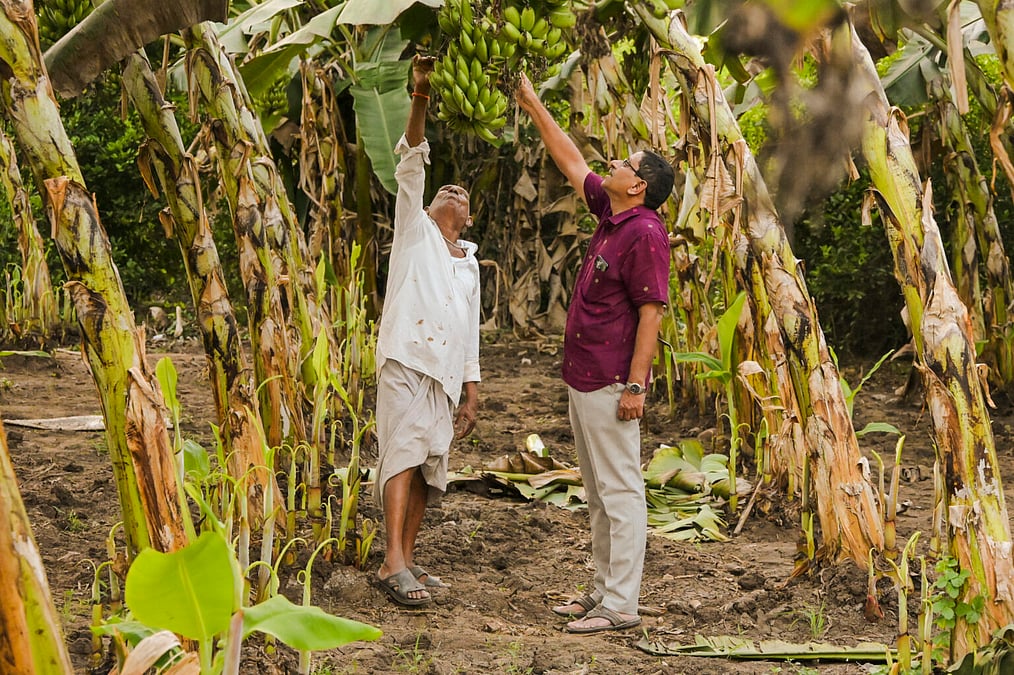
The Andhra Pradesh Community Managed Natural Farming programme (APCNF) has been awarded the 2026 Food Planet Prize, a prestigious environmental award that recognizes innovative approaches to transforming food systems. The prize, worth $1.5 million, was presented in Båstad, Sweden, on June 2, 2026, by the Curt Bergfors Foundation.
The APCNF programme was launched in 2016 by Rythu Sadhikara Samstha, under Andhra Pradesh’s agriculture department, with the goal of promoting natural farming practices that reduce dependence on synthetic inputs and support climate-resilient agriculture. The programme has since grown into one of the world’s largest community-led agroecology movements, working with approximately 1.8 million farming families and 340,000 women’s self-help groups across Andhra Pradesh.
According to officials, the programme has been successful in helping farmers reduce their dependence on synthetic inputs, improving soil health, and increasing climate resilience. The programme’s methods are now being shared across 22 Indian states, as well as in Sri Lanka and Zambia, demonstrating its potential for replication and scaling.
The award citation recognized APCNF’s work in showing that farming in harmony with nature can improve soil health, biodiversity, and farm resilience while reducing input costs. Andhra Pradesh Chief Minister N Chandrababu Naidu described the recognition as a “first for India” and stated that the state aims to become “100 per cent natural Andhra Pradesh by 2047”.
The programme’s success can be attributed to its community-led approach, which empowers farmers to take ownership of their farming practices and promotes farmer-to-farmer learning. Over 10,000 community resource persons support farmer-to-farmer learning, while farmer scientists and mentors help document and strengthen natural farming practices. More than 60 per cent of community resource persons involved in training farmers are women, highlighting the programme’s commitment to promoting women’s empowerment and gender equality.
The 2026 Food Planet Prize received over 1,000 nominations from around the world, with APCNF being selected as one of four finalists from a longlist of 35 initiatives across 19 countries and six continents. The prize is a testament to the programme’s innovative approach to sustainable agriculture and its potential to inspire positive change in food systems globally.
For farmers such as Kuruda Radha from Allapattu village in Alluri Sitharama Raju district, the award is a moment of pride. “We have been eating chemical-free food grown in our own garden,” she said, highlighting the programme’s impact on the lives of small farmers and their families. The recognition is also a testament to the dedication and hard work of the 1.8 million farm families, 700,000 farmworker families, and the women’s self-help groups driving the transition to natural farming.
The APCNF programme’s win is a significant milestone in the global movement towards sustainable agriculture and a testament to the power of community-led initiatives in driving positive change. As the world grapples with the challenges of climate change, biodiversity loss, and food insecurity, the APCNF programme offers a beacon of hope and a model for replication and scaling.
Summary Points
The Andhra Pradesh Community Managed Natural Farming programme (APCNF) has won the 2026 Food Planet Prize, a prestigious environmental award worth $1.5 million.
The programme works with 1.8 million farming families and 340,000 women’s self-help groups across Andhra Pradesh, promoting natural farming practices that reduce dependence on synthetic inputs and support climate-resilient agriculture.
The programme’s methods are now being shared across 22 Indian states, as well as in Sri Lanka and Zambia, demonstrating its potential for replication and scaling.
The award citation recognized APCNF’s work in showing that farming in harmony with nature can improve soil health, biodiversity, and farm resilience while reducing input costs.
The programme’s community-led approach empowers farmers to take ownership of their farming practices and promotes farmer-to-farmer learning, with over 10,000 community resource persons supporting farmer-to-farmer learning.