Bull Shoals Dam Celebrates 75 Years: A Testament to Engineering and Community
The Baxter County Historical & Genealogical Society (BCHGS) is set to commemorate the 75th anniversary of the completion of Bull Shoals Dam, a monumental feat of engineering that has stood the test of time. The celebration will feature key speakers from the U.S. Army Corps of Engineers (USACE), including Col. Walter T. Allard, commander of the Little Rock District, and Jay Townsend, chief of public affairs.
The event, scheduled for 6 p.m. on July 28 at the Donald W. Reynolds Library, promises to be an insightful look into the history and significance of the dam. Col. Allard, who assumed command of the Little Rock District on May 22, will provide valuable perspectives on the district's management of $30 billion in military and civilian water resources, including the Bull Shoals and Norfork dams and reservoirs.
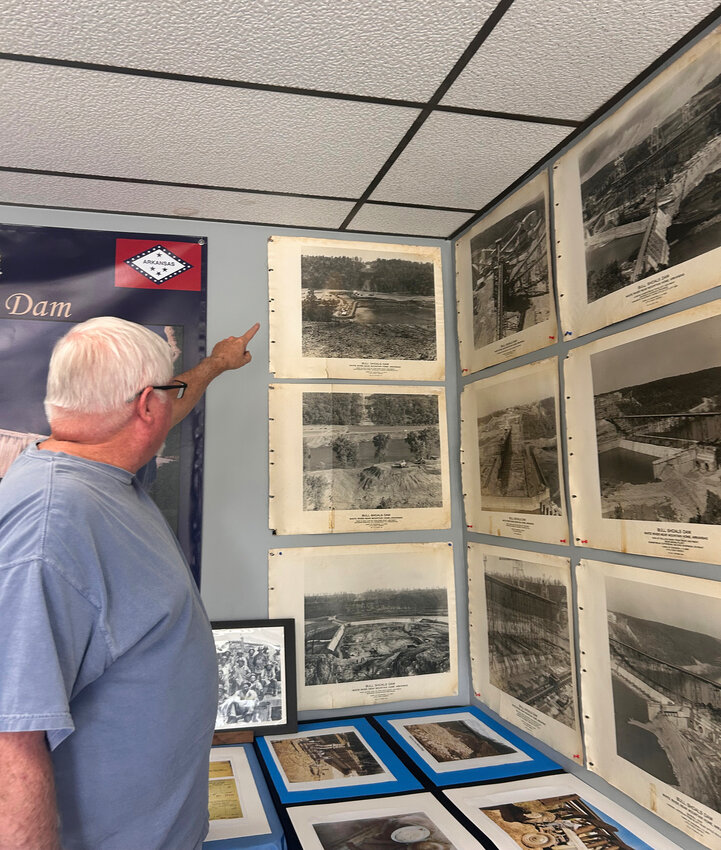
In anticipation of the anniversary, BCHGS unveiled a special exhibit at the Historical Museum, located at 300 Bomber Blvd. The exhibit, which will be available for viewing until September, features numerous pictures, artifacts, and stories from the dam's construction period. Kevin Bodenhamer, a member of BCHGS, worked tirelessly to curate an exhibit that showcases the progression of the dam's construction through time-period photographs.
The exhibit includes a range of fascinating artifacts, such as a seven-mile long conveyor belt from Lee's Mountain near Flippin to Bull Shoals, and a list of cemeteries that had to be relocated during the project. Jeff Quick, CEO of the Food Bank of North Central Arkansas, generously loaned the museum several helmets worn by his grandfather, Benjamin Franklin Quick, during the construction of the dam.
One of the most intriguing aspects of the exhibit is an actual core sample taken during the project. Initially, the USACE planned to locate the dam further down towards Wildcat Shoals but decided on Bull Shoals after conducting samples. The core sample, now on display, provides a glimpse into the geological history of the area and the meticulous planning that went into the dam's construction.
The Bull Shoals Dam project, completed in 1951, was a groundbreaking achievement that marked one of the largest concrete structures in the world at the time. Standing at 256 feet high and 2,256 feet long, the dam played a crucial role in flood control and hydroelectric power generation. Authorized by the Flood Control Act of 1938, the dam was constructed in response to severe flooding between 1915 and 1927, and its completion was formally dedicated by Pres. Harry S. Truman on July 2, 1952.
Today, the dam's powerhouse is equipped with eight generating units, boasting a total capacity of 361,000 kilowatts. The impoundment created Bull Shoals Lake, an expansive reservoir with over 1,000 miles of shoreline, making it a popular destination for water sports and fishing. As the community comes together to celebrate the 75th anniversary of the Bull Shoals Dam, it is a testament to the enduring legacy of this engineering marvel and its significance to the region's history and development.
Summary Points
The Bull Shoals Dam was completed in 1951 and stands as one of the largest concrete structures in the world at the time of its construction.
The dam plays a crucial role in flood control and hydroelectric power generation, with a total capacity of 361,000 kilowatts.
The impoundment created Bull Shoals Lake, an expansive reservoir with over 1,000 miles of shoreline, popular for water sports and fishing.
The construction of the dam required the relocation of several cemeteries, highlighting the significant impact on the local community.
The 75th anniversary celebration will feature key speakers from the USACE, including Col. Walter T. Allard and Jay Townsend, providing valuable insights into the dam's history and significance.