Unveiling Ancient Secrets: India's Largest Stone Labyrinth Reveals Mediterranean Trade Links
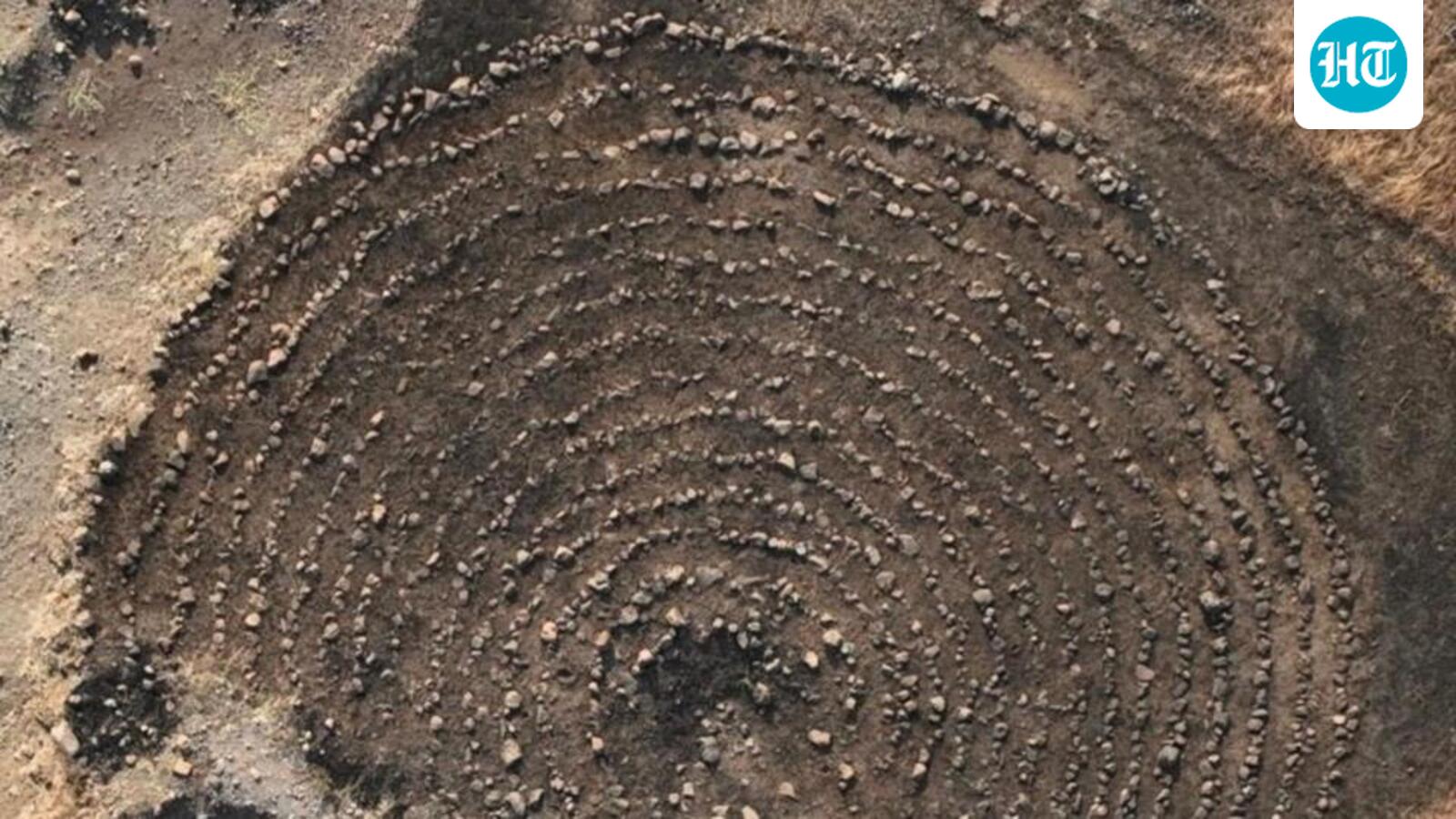
A groundbreaking archaeological discovery in Khadki, on the Solapur-Dharashiv border, has unearthed what is believed to be India's largest known ancient stone labyrinth. This rare, 15-circuit circular structure sheds new light on the Satavahana-era trade network, connecting the Deccan region to the Roman world. The findings, published in the July 2026 edition of Caerdroia, an international journal dedicated to labyrinth studies, have significant implications for our understanding of ancient trade routes and cultural exchange.
The labyrinth, first discovered in late 2025 by members of the Nature Conservation Circle, was hidden beneath dense grassland for years. Following excavation, a remarkably well-preserved circular stone formation, measuring 50 feet in diameter, was revealed. According to researchers Sachin Bhagwan Patil and P D Sabale, the labyrinth features a 15-circuit classical design with a tightly-coiled spiral centre, making it the largest and most intricate example of its kind reported along the ancient trade routes.
The structure's construction is a testament to the ingenuity of the ancient civilization that built it. Using naturally available basalt rubble and cobblestones embedded in black cotton soil, the labyrinth has survived for nearly two millennia with minimal damage. Its location, within a protected landscape, has helped preserve the monument from modern disturbances. The site lies on agricultural land near Khadki village, surrounded by reserved forest and semi-arid grasslands.
The discovery of the labyrinth has significant implications for our understanding of the ancient trade network that linked the Deccan region to the Roman Mediterranean. The location of the labyrinth is unlikely to be accidental, sitting as it does along an ancient overland trade corridor that connected ports on India's western coast with important inland commercial centres such as Ter and Paithan. Archaeological discoveries from Brahmapuri, including Roman artefacts such as a bronze mirror and a statue of a Greco-Roman sea god, provide further evidence of the flourishing maritime commerce during the period.
The researchers suggest that the labyrinth may have served multiple purposes, blending local Chakravyuha traditions with classical labyrinth design. While its exact purpose remains uncertain, it is clear that the labyrinth played a significant role in the lives of merchants and travellers moving through the region. The discovery of the labyrinth is a reminder of the rich cultural heritage of the Deccan region and the significance of preserving our historical monuments for future generations.
The Satavahana era, which flourished between the late second century BCE and early third century CE, was a period of significant cultural and economic growth in the Deccan region. The discovery of the labyrinth provides a unique window into the lives of the people who lived during this period, highlighting the complex trade networks and cultural exchange that characterized the region. As researchers continue to study the labyrinth and its significance, it is clear that this discovery will have a profound impact on our understanding of ancient Indian history and culture.
In conclusion, the discovery of India's largest stone labyrinth in Khadki is a significant archaeological find that sheds new light on the ancient trade network that linked the Deccan region to the Roman Mediterranean. The labyrinth's intricate design, construction, and location provide a fascinating glimpse into the lives of the people who built it, and its preservation is a testament to the importance of protecting our cultural heritage for future generations.
Summary Points
The Khadki stone labyrinth is believed to be India's largest known ancient stone labyrinth, featuring a 15-circuit classical design with a tightly-coiled spiral centre.
The labyrinth was constructed using naturally available basalt rubble and cobblestones embedded in black cotton soil, and has survived for nearly two millennia with minimal damage.
The discovery of the labyrinth provides significant insights into the ancient trade network that linked the Deccan region to the Roman Mediterranean.
The labyrinth is located along an ancient overland trade corridor that connected ports on India's western coast with important inland commercial centres such as Ter and Paithan.
The discovery of the labyrinth highlights the importance of preserving our cultural heritage for future generations, and provides a unique window into the lives of the people who lived during the Satavahana era.