Unveiling America's Founding Moment: The Story Behind John Trumbull's Iconic Painting
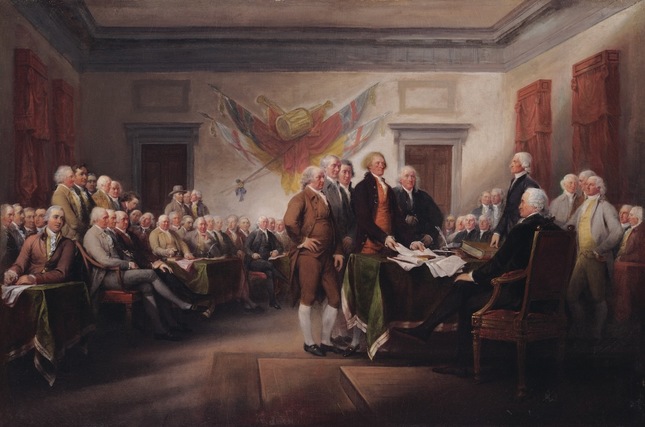
One of the most revered paintings in American history, John Trumbull's 'The Declaration of Independence, July 4, 1776,' is more than just a masterpiece of art - it's a window into the country's founding moment. This iconic piece, which took Trumbull 34 years to complete, is a testament to the artist's dedication and the significance of the event it depicts. Today, the original painting is housed at the Yale University Art Gallery, where it remains an integral part of American history and a symbol of the nation's birth.
The story of how this painting came to be is as fascinating as the event it portrays. It begins in Paris in 1786, where Trumbull met with Thomas Jefferson, the author of the Declaration of Independence. Jefferson, recognizing the importance of capturing this pivotal moment in American history, urged Trumbull to paint the scene. Trumbull, who had already begun his series of paintings on the American Revolution, was inspired by Jefferson's suggestion and set out to recreate the moment when the Declaration was presented to the Continental Congress.
Despite its title, the painting does not depict the actual signing of the Declaration, which occurred on August 2, 1776. Instead, it shows an invented scene of Jefferson and the other members of the drafting committee presenting the document to John Hancock, the president of the Continental Congress, on June 28. This deliberate choice by Trumbull underscores the importance of the document's creation and the role of its drafters in shaping American history. The painting includes 48 individuals, some of whom did not sign the Declaration but were members of the Continental Congress, further emphasizing the collaborative nature of the document's creation.
Trumbull's approach to painting 'The Declaration of Independence' was meticulous and groundbreaking. A skilled painter of miniature portraits, he insisted on painting as many of his subjects from life as possible. This dedication meant that he carried the unfinished canvas with him for years, traveling across the country to meet with the signers of the Declaration and paint their likenesses directly onto the canvas. For those who had passed away, he relied on existing portraits or painted their relatives to ensure accuracy. This labor of love, spanning over three decades, is a testament to Trumbull's commitment to historical accuracy and his desire to immortalize the individuals who shaped America's future.
The painting's journey to its current home at the Yale University Art Gallery is also intertwined with the history of the university. In 1830, Yale professor Benjamin Silliman, who was married to Trumbull's niece, visited the artist in New York City. Finding Trumbull living in poverty, Silliman proposed a solution that would benefit both the artist and the university. Trumbull would donate his paintings, including 'The Declaration of Independence,' to Yale in exchange for a $1,000 annuity for the remainder of his life. This agreement not only secured Trumbull's financial future but also led to the establishment of the first university art gallery in the United States, which opened in 1832.
Today, Trumbull's 'The Declaration of Independence' is an integral part of America's cultural heritage, reproduced on postage stamps, the $2 bill, and in countless adaptations. However, to experience the original, one must visit the Yale University Art Gallery. The painting stands as a reminder of the pivotal moment in American history it depicts and the enduring legacy of John Trumbull, who dedicated his life to capturing the essence of the American Revolution through his art.
Summary Points
John Trumbull's 'The Declaration of Independence, July 4, 1776' is a seminal work in American art, depicting the presentation of the Declaration to the Continental Congress.
The painting was the result of a 34-year labor of love by Trumbull, who insisted on painting many of his subjects from life.
The scene is an invented one, showing Jefferson and the drafting committee presenting the Declaration to John Hancock on June 28, 1776.
Trumbull's meticulous approach involved traveling across the country to paint the signers of the Declaration and using existing portraits or relatives for those who had passed away.
The painting's acquisition by Yale University led to the establishment of the first university art gallery in the United States, further solidifying its place in American cultural and historical heritage.