Bayreuth Festival Celebrates 150 Years Amidst Controversy and Innovation
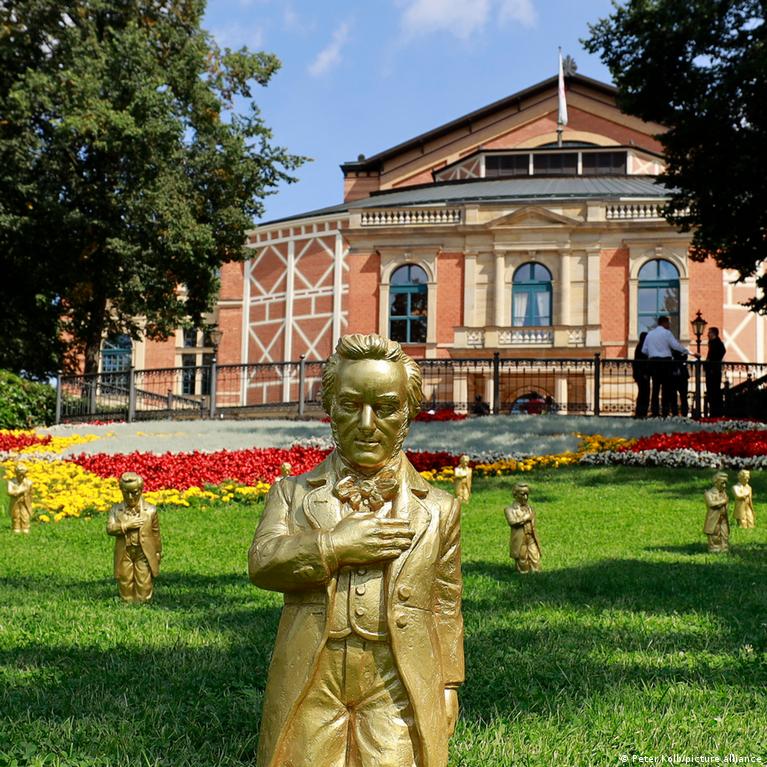
The Bayreuth Festival, one of the most prestigious opera festivals in the world, has kicked off its 150th anniversary celebrations with a mix of excitement, controversy, and innovation. The festival, which takes place in the German town of Bayreuth, has been a benchmark for opera excellence since its inception in 1876. This year's anniversary program promises to be an unforgettable experience, with a new staging of Richard Wagner's landmark work, 'The Ring of the Nibelung,' using artificial intelligence, and a new production of the opera 'Rienzi,' Wagner's first major success.
The festival's history is inextricably linked with that of its founder, Richard Wagner, a composer who was also a prominent figure in German culture and society. Wagner's vision for the festival was to create a unique and immersive experience that would showcase his operas in a specially designed theater. The first Bayreuth Festival opened on August 13, 1876, after years of disputes over funding, and was attended by philosopher Friedrich Nietzsche, a friend and admirer of Wagner. Nietzsche praised the event, calling it 'the first circumnavigation of the world in the realm of art.'
This year's anniversary program is diverse and includes a range of productions that showcase Wagner's works in new and innovative ways. The opening ceremony on July 25 features a major work by Wagner's idol, Ludwig van Beethoven — Symphony No. 9, which was conducted by Wagner himself in 1872 at the Margravial Opera House in Bayreuth. The festival also includes a new production of 'Rienzi,' Wagner's first major success, composed at the age of 29. The use of artificial intelligence in the staging of 'The Ring of the Nibelung' is a significant innovation that promises to enhance the audience's experience and provide a fresh perspective on Wagner's masterpiece.
However, the festival's 150th anniversary celebrations have been marred by controversy surrounding the initial exclusion and subsequent re-invitation of German-French journalist Michel Friedman. Friedman, a prominent voice on Jewish life and a former president of the European Jewish Congress, was invited to speak at a memorial event titled 'Silenced Voices,' which honors the many Jewish artists whose work at Bayreuth was ended by antisemitism, persecution, and murder. Friedman's speech was meant to highlight the festival's efforts to confront its Nazi past and Wagner's antisemitic views. The controversy surrounding Friedman's invitation has sparked a heated debate about the festival's historical responsibility and its commitment to confronting its dark past.
The Bayreuth Festival's history is indeed complex and multifaceted, with a legacy that is both glorious and troubled. The festival's connection to National Socialism and the Wagner family's involvement with the Nazi regime are well-documented. The festival's management has acknowledged its historical responsibility and has taken steps to address its past, including the creation of a memorial to the Jewish artists who were persecuted and murdered during the Nazi era. The inclusion of musical works by Jewish composers, such as Gustav Mahler and Pavel Haas, in the festival's program is a significant gesture of recognition and tribute to the victims of the Holocaust.
In conclusion, the Bayreuth Festival's 150th anniversary celebrations are a testament to the power of art to transcend time and adversity. Despite the controversy and challenges, the festival remains a beacon of excellence and innovation, committed to showcasing the works of Richard Wagner and other great composers in new and exciting ways. As the festival looks to the future, it is clear that its legacy will continue to inspire and educate audiences around the world.
Summary Points
The Bayreuth Festival is celebrating its 150th anniversary with a diverse program that includes a new staging of Richard Wagner's 'The Ring of the Nibelung' using artificial intelligence.
The festival's history is complex and multifaceted, with a legacy that is both glorious and troubled, including its connection to National Socialism and the Wagner family's involvement with the Nazi regime.
The festival's management has acknowledged its historical responsibility and has taken steps to address its past, including the creation of a memorial to the Jewish artists who were persecuted and murdered during the Nazi era.
The inclusion of musical works by Jewish composers, such as Gustav Mahler and Pavel Haas, in the festival's program is a significant gesture of recognition and tribute to the victims of the Holocaust.
The festival's commitment to innovation and excellence has made it a benchmark for opera festivals around the world, and its legacy will continue to inspire and educate audiences for generations to come.
