The World Cup: A Tournament of Limited Global Representation
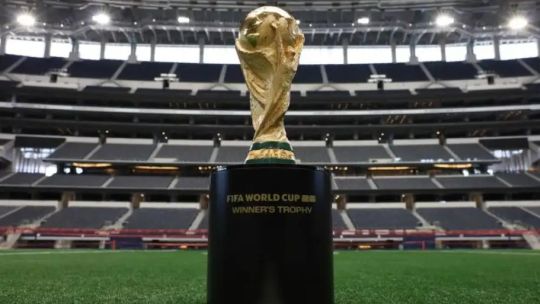
The FIFA World Cup, often regarded as the pinnacle of international football, is set to kick off, drawing the attention of billions of fans worldwide. However, beneath its global appeal lies a less diverse reality. With 211 member associations, only 80 have ever participated in the tournament since its inception in 1930. This discrepancy prompts a critical examination of the World Cup's claim to being a truly global event.
At the highest level of competition, the gap narrows further, with only eight countries having ever won the World Cup. Notably, all these nations are either past or present members of the European Union or Mercosur, underscoring a significant skew towards these regions. This raises questions about the tournament's ability to represent the global football community, with such a small group of countries dominating the competition.
Argentina, one of the most successful teams in the history of the World Cup, is a prime example of this dominance. The country's yearning for a fourth World Cup title is palpable, but the reality is that only a handful of nations have consistently competed at the highest level. Brazil, Germany, Italy, and France have all achieved the rare feat of winning the World Cup, finishing as runners-up, and securing third place, thereby completing their medal collections. Argentina, despite its illustrious past, has not secured a bronze medal, having won all six of its World Cup semi-finals.
Looking beyond the forecasts and speculative predictions that dominate pre-tournament discussions, it is essential to scrutinize the World Cup's global representation. The tournament's name suggests a competition that includes the best of the world, yet the participation of 80 out of 211 member associations over nearly a century reveals a more limited scope. The bulk of the world's population resides in countries whose football teams have either never participated in the World Cup or have done so without significant success.
The historical context of the World Cup's development also sheds light on its current state. The introduction of the group stage, for instance, was a response to the challenges faced by teams like the Dutch East Indies (now Indonesia) in the 1938 World Cup. Their experience of traveling to France, losing 6-0 to Hungary, and then embarking on a six-week journey back home led FIFA to create a format that guarantees teams at least three matches, aiming to prevent such ordeals in the future.
Moreover, the correlation between a country's population and its football prowess is not as direct as one might assume. China and Indonesia, two of the most populous nations, have had limited success in the World Cup, with the latter's early exit in the 1938 tournament being a notable example. This disconnect highlights the complexity of factors influencing a country's football success, including investment, infrastructure, and cultural factors.
In conclusion, while the World Cup remains the most widely watched and highly anticipated sporting event globally, its claim to being a truly world representative tournament is challenged by the limited participation and success of countries outside a small group of dominant nations. As the tournament progresses, it will be intriguing to see how the dynamics of global football evolve and whether the World Cup can indeed become more inclusive of the diverse footballing talents across the globe.
Summary Points
Only 80 out of 211 FIFA member associations have participated in the World Cup since 1930.
Just eight countries have won the World Cup, all of which are from the European Union or Mercosur.
The World Cup's name may be a misnomer given its limited global representation.
Historical context, such as the introduction of the group stage, has shaped the tournament's current format.
The correlation between a country's population and its football success is not straightforward, with various factors influencing performance.
