US Air Force Unveils B-1B Bomber Carrying Hypersonic Missile System in Groundbreaking First
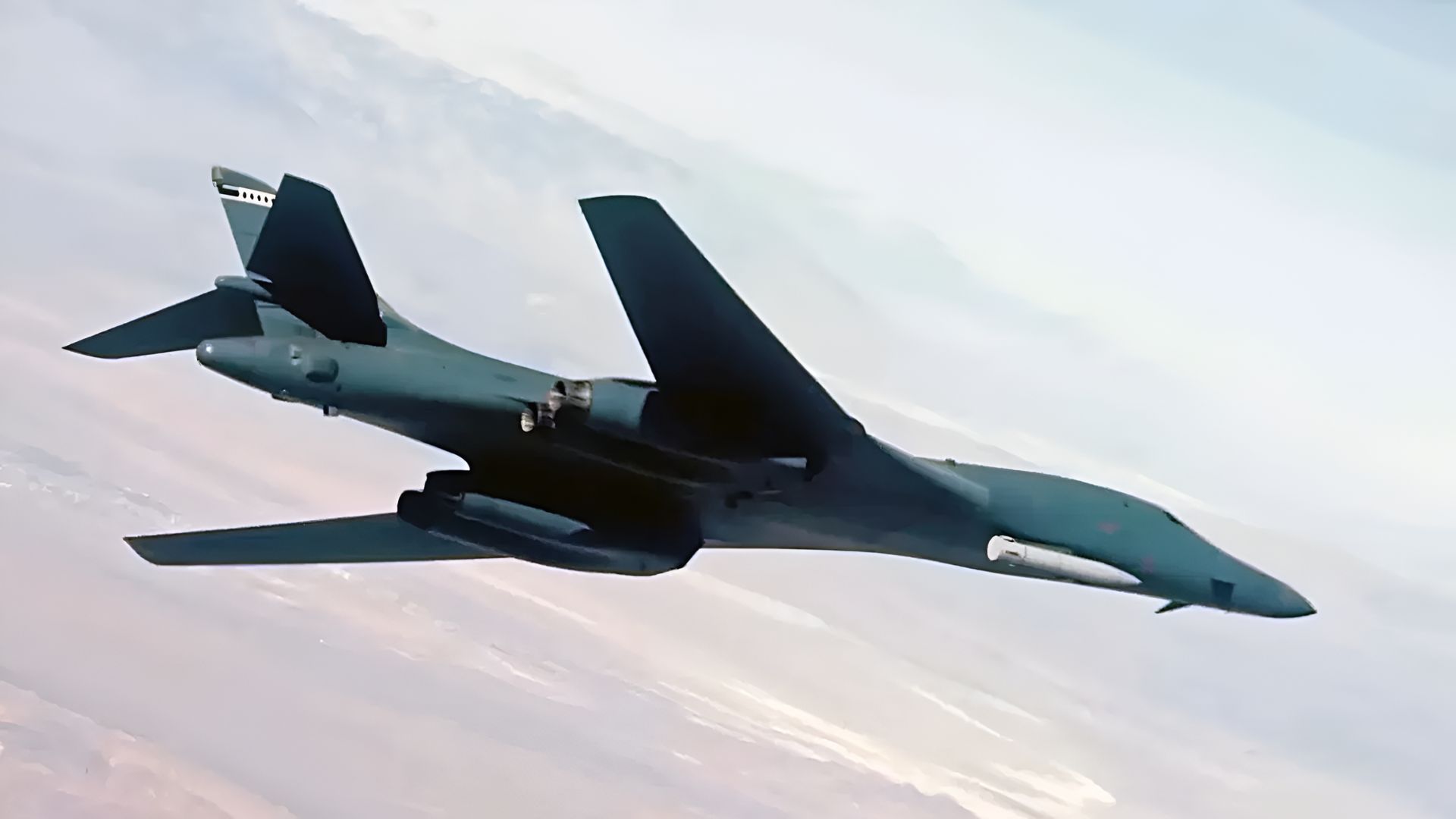
In a significant milestone for the US Air Force, a recent video released from Edwards Air Force Base has provided the first public glimpse of the B-1B Lancer bomber carrying the AGM-183A ARRW hypersonic missile system. This development marks a crucial step forward in the integration of hypersonic capabilities into the Air Force's arsenal, as the B-1B is now poised to play a key role in the service's future strike operations.
The footage, which was posted on April 29, 2026, shows the B-1B bomber with the ARRW missile mounted on an external pylon beneath the aircraft. This is a significant departure from the missile's previous appearances, which were exclusively on the B-52H Stratofortress. The use of the same station that has been used for JDAM trials and the Sniper targeting pod underscores the adaptability of the B-1B's design and its capacity to integrate a wide range of weaponry.
While officials have not disclosed details about the flight, including when it took place, the visual confirmation alone is a powerful indication that the B-1B can indeed handle the external carriage of a hypersonic weapon. This is supported by budget material from the Fiscal Year 2027 Research, Development, Test & Evaluation request, which outlines work under the Hypersonic Integration Program. The document notes that the Air Force has "successfully demonstrated the B-1 B's ability to execute a captive carry of a 5,000-pound class store and the release of a proven weapon shape from a Load Adaptable Modular (LAM) pylon." This statement points to earlier tests with heavy payloads and highlights the role of new pylons designed to carry larger weapons with fewer restrictions.
The development of the ARRW program has not been without its challenges, including several failed tests that raised questions about the program's future. However, the tone has shifted significantly, with the FY2027 budget including $345.7 million for ARRW work, and total planned spending reaching $1.7 billion through 2030. This funding supports both the Increment 2 upgrade and a new Air-Launched Ballistic Missile effort, demonstrating the Air Force's commitment to hypersonic development.
The B-1B's role in the Air Force's future operations is also evolving, with plans to keep the bomber flying until at least 2037, a significant extension of its previously planned retirement date. The service intends for the B-1B to focus on stand-off strikes using long-range weapons, and the addition of the ARRW to its arsenal fits squarely within this strategy. By leveraging the B-1B's capabilities in conjunction with other bomber platforms, the Air Force is diversifying its hypersonic capabilities and reducing its reliance on a single bomber for these critical missions.
The video clip, though brief, raises more questions than it answers, including the specifics of the flight and the timeline for the ARRW's integration into operational service. Nonetheless, it unequivocally demonstrates that the development of hypersonic capabilities has moved beyond the planning stage, marking a new chapter in the evolution of US Air Force strike capabilities.
As the US Air Force continues to push the boundaries of hypersonic technology, the integration of the ARRW with the B-1B bomber represents a critical step forward. The ability to carry and potentially launch hypersonic missiles from a versatile platform like the B-1B significantly enhances the Air Force's strike capabilities, offering a potent tool for deterring adversaries and protecting national interests. With the ARRW program now gaining momentum, it will be intriguing to observe how this technology continues to develop and how it will be employed in future operations.
The implications of this development are far-reaching, touching on aspects of national security, technological innovation, and strategic deterrence. As the world witnesses the emergence of hypersonic weapons as a game-changer in modern warfare, the collaboration between the US Air Force and its partners in developing these capabilities will be under close scrutiny. The successful integration of the ARRW with the B-1B bomber is not just a milestone for the Air Force but also a testament to the power of innovation and strategic planning in advancing military capabilities.
Looking ahead, the path to fully operationalizing the ARRW and other hypersonic systems will undoubtedly be complex, involving rigorous testing, training, and strategic planning. However, with the Air Force's commitment to hypersonic development and the B-1B's demonstrated capability to carry these advanced missiles, the future of strike operations looks increasingly promising. The ability to deploy hypersonic weapons from a platform as capable as the B-1B Lancer bomber will significantly enhance the flexibility and lethality of US Air Force operations, paving the way for a new era in military aviation.
In conclusion, the public unveiling of the B-1B bomber carrying the ARRW hypersonic missile system is a watershed moment, reflecting the US Air Force's dedication to advancing its capabilities and staying at the forefront of military technology. As the world watches the development of hypersonic weapons with great interest, the Air Force's progress in this area serves as a powerful reminder of its commitment to defending national interests and protecting its allies through the strategic employment of cutting-edge technology.
Summary Points
The US Air Force has publicly shown the B-1B Lancer bomber carrying the AGM-183A ARRW hypersonic missile system for the first time.
The integration of the ARRW with the B-1B represents a significant step forward in the Air Force's hypersonic development program.
The B-1B's ability to carry hypersonic missiles enhances its role in future strike operations, aligning with the Air Force's strategy to focus on stand-off strikes using long-range weapons.
The development of the ARRW program has faced challenges, including failed tests, but the Air Force remains committed, with significant funding allocated for continued development.
The extension of the B-1B's service life to at least 2037 and its integration with hypersonic capabilities underscore the Air Force's evolving strategy and its focus on maintaining technological superiority.