Vietnam Spearheads 5G Revolution, Paving the Way for 6G Dominance
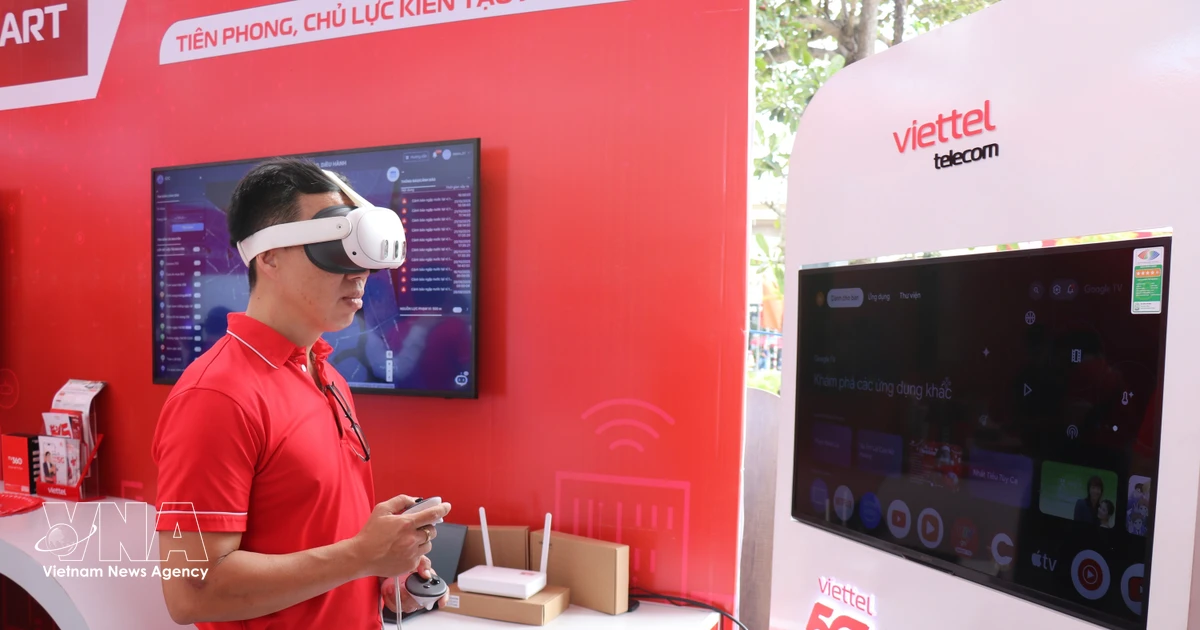
Vietnam is making significant strides in the telecommunications sector with its accelerated 5G rollout, setting the stage for the development of 6G technology. The country's telecommunications carriers are working tirelessly to expand 5G coverage, commercialize services, and lay the groundwork for the next generation of wireless technology.
According to the Vietnam Telecommunications Authority (VNTA) under the Ministry of Science and Technology, Vietnam has installed nearly 40,000 base transceiver stations as of February 2026, covering about 90% of the population and serving close to 23 million subscribers. This rapid deployment reflects the country's consistent development philosophy, which prioritizes infrastructure development as the foundation for future growth.
Viettel, one of the leading telecommunications carriers in Vietnam, has completed the installation of 23,500 5G stations in 2025 alone, bringing its total to over 30,000. The network now achieves 90% outdoor coverage and 70% indoor coverage nationwide, from urban centers to rural areas. Viettel is also the only carrier in Vietnam to have fully deployed a standalone 5G (5G SA) network, capable of delivering speeds of up to 10 Gbps.
The benefits of 5G technology are multifaceted, enabling enterprises to automate production, develop telemedicine services, and build smart cities. With speeds 10-15 times higher than 4G, 5G is poised to revolutionize various sectors, including logistics, manufacturing, and services. Experts believe that effective utilization of 5G is key to unlocking its full economic potential, and Vietnam is well-positioned to reap the benefits of this technology.
To fully develop the digital economy, Vietnam needs to invest simultaneously in three pillars: upgrading network infrastructure, expanding fiber-optic coverage, and accelerating 5G rollout. A multi-pronged strategy with clear priorities will be crucial for Vietnam to achieve its digital economy targets by 2030. The country's ambition to build 100 smart cities by 2040 is creating momentum for intensive and extensive digitalization, with 5G technology playing a vital role in this process.
As Vietnam continues to push the boundaries of 5G technology, it is also preparing for the development of 6G. The next generation of wireless technology is expected to offer even faster speeds, lower latency, and greater connectivity, enabling a wide range of new applications and services. With its strong foundation in 5G, Vietnam is well-positioned to be at the forefront of 6G development, driving innovation and growth in the telecommunications sector.
In conclusion, Vietnam's accelerated 5G rollout is a significant milestone in the country's telecommunications sector, paving the way for the development of 6G technology. With its strong infrastructure, innovative approach, and commitment to digitalization, Vietnam is poised to become a leader in the global telecommunications industry, driving growth, innovation, and economic development in the years to come.
Summary Points
Vietnam has installed nearly 40,000 base transceiver stations, covering about 90% of the population and serving close to 23 million subscribers.
Viettel has completed the installation of 23,500 5G stations in 2025 alone, bringing its total to over 30,000.
5G technology enables enterprises to automate production, develop telemedicine services, and build smart cities.
Vietnam needs to invest simultaneously in three pillars: upgrading network infrastructure, expanding fiber-optic coverage, and accelerating 5G rollout.
The country's ambition to build 100 smart cities by 2040 is creating momentum for intensive and extensive digitalization, with 5G technology playing a vital role in this process.