Floods Devastate Afghan Families, Leaving Thousands Without Homes or Livelihoods
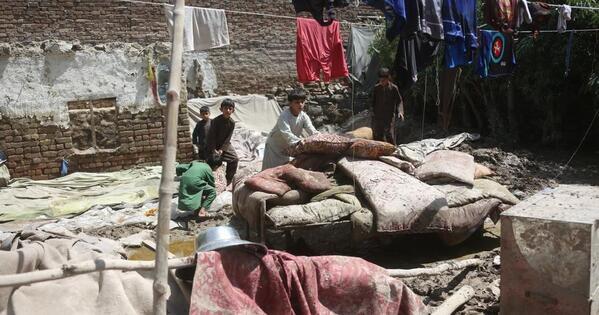
Afghanistan is reeling from the aftermath of devastating floods that have ravaged homes, harvests, and livelihoods, leaving thousands of families without access to basic necessities. The flooding, which has affected 31 out of 34 provinces, has resulted in the loss of life, injury, and widespread destruction of property and agricultural land.
In the eastern province of Nangarhar, families are struggling to come to terms with the extent of the damage. Shir Khan, a resident of a village on the outskirts of Jalalabad, the provincial capital, has lost everything. "We have nothing. We do not have a home to dwell in, and we do not have something to put on," he said, standing amidst the mud and silt that now fill his courtyard. The floodwaters swept away all of the family's belongings, destroyed every room and the kitchen, and left them without a source of income.
The situation is dire, with many families forced to seek shelter with neighbors or in makeshift camps. The cost of rebuilding is prohibitively expensive, with the construction of a single room costing around 200,000 to 300,000 afghanis (approximately $3,120 to $4,680 USD). For families like Shir Khan's, who rely on subsistence farming or casual labor to make ends meet, the prospect of rebuilding is daunting.
The floods have also destroyed agricultural lands, leaving families without a source of income or food. Landowner Haji Sayed Ghani, whose family of 10 relies on the wheat harvest from his fields, watched in horror as the floodwaters destroyed his crops. "All of the people were waiting for the harvest from the fields," he said. "The flood has caused huge damage; all of the agricultural lands have been destroyed."
According to provincial disaster management officials, the floods have killed 15 people and injured more than 80 others in Nangarhar province, while destroying hundreds of acres of farmland. The United Nations Population Fund estimates that over 73,000 people have been affected by the floods nationwide, with displaced families, particularly women and girls, facing acute challenges in accessing healthcare, food, emergency shelter, and psychosocial support.
The disaster is not an isolated incident, but rather part of a larger pattern of vulnerability to natural disasters in Afghanistan. The country is prone to earthquakes, landslides, and flooding due to its geographical location and lack of infrastructure. In the past three weeks, natural disasters have killed 189 people and injured 253 others, while destroying over 7,000 residential properties and washing away more than 21,000 acres of agricultural land.
The Afghan government and international organizations are working to respond to the crisis, but the scale of the disaster is vast, and the needs are immense. As the country struggles to rebuild and recover, it is clear that a long-term commitment to disaster risk reduction and sustainable development will be necessary to mitigate the impact of future disasters.
Summary Points
Over 73,000 people have been affected by the floods in 31 out of 34 provinces in Afghanistan
The floods have destroyed hundreds of acres of farmland, leaving families without a source of income or food
15 people have been killed and more than 80 others injured in Nangarhar province alone
The cost of rebuilding a single room is around 200,000 to 300,000 afghanis (approximately $3,120 to $4,680 USD)
The Afghan government and international organizations are working to respond to the crisis, but the needs are immense and long-term commitment to disaster risk reduction and sustainable development is necessary