Artemis II Astronauts Mark Historic Homecoming, Paving the Way for Lunar Exploration
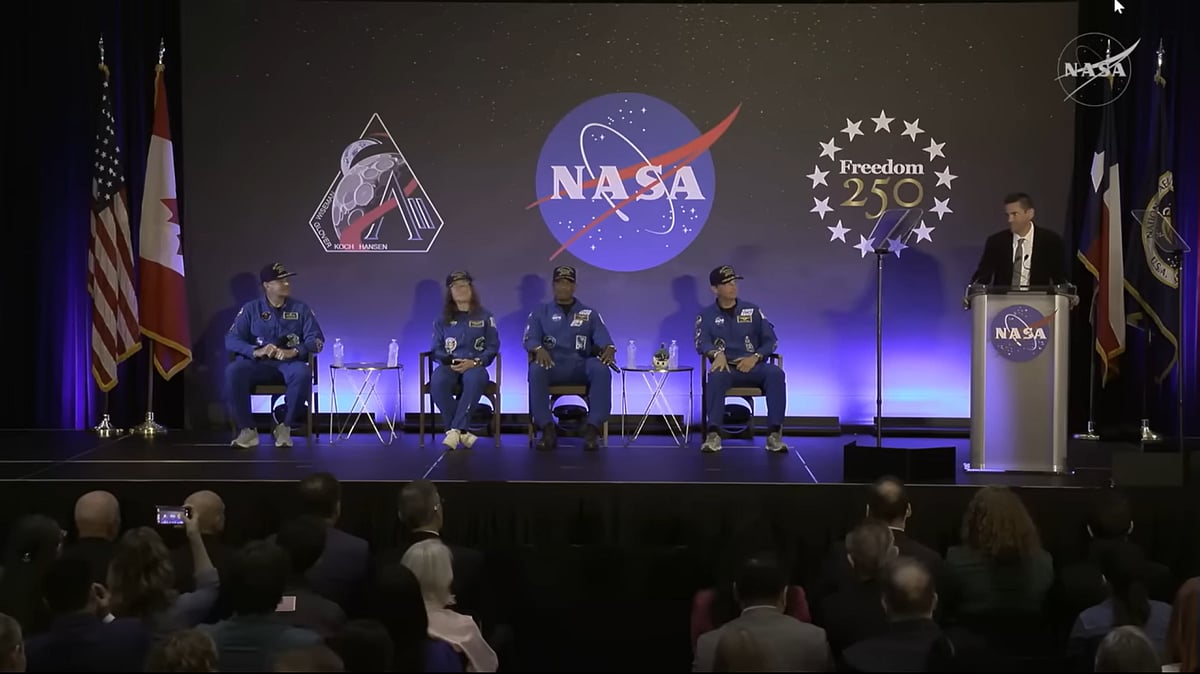
The four astronauts of the Artemis II mission have made a triumphant return to Earth, marking a major milestone in NASA's ambitious plan to establish a sustainable presence on the lunar surface. The crew, consisting of NASA astronauts Christina Koch, Reid Wiseman, and Victor Glover, along with Canadian Space Agency astronaut Jeremy Hansen, was welcomed back at Houston's Ellington Field on Saturday, April 11.
Their spacecraft, the Orion, re-entered Earth's atmosphere at a staggering Mach 39 and splashed down in the Pacific Ocean, bringing an end to a 10-day deep-space flight that covered an impressive 694,481 miles around the far side of the Moon. This feat sets a new human distance record, surpassing the previous mark held since the Apollo 13 mission in 1970.
The Artemis II mission was a critical step in validating the systems and technologies needed for future long-duration lunar missions. The Orion spacecraft's environmental control and life support systems, which are essential for sustaining human life in space, were tested with a crew on board for the first time. The astronauts also conducted manual piloting maneuvers to assess the spacecraft's handling for future docking and rendezvous operations.
During the homecoming event, the crew reflected on the physical, emotional, and psychological demands of the mission. NASA astronaut Christina Koch poignantly described Earth as a 'lifeboat' suspended in space, emphasizing the shared connection that unites humanity. Mission commander Reid Wiseman highlighted the sacrifices made by the astronauts' families during the flight and noted that the crew formed a lasting bond during their journey.
Canadian Space Agency astronaut Jeremy Hansen described the mission as a reflection of humanity's potential, while pilot Victor Glover succinctly captured the essence of the experience, stating that it was 'too big to just be in one body.' The crew's sentiments were echoed by NASA Administrator Jared Isaacman, who emphasized that the Artemis program marks NASA's return to lunar exploration and paves the way for future missions to Mars.
The Artemis II mission also yielded a treasure trove of scientific data and imagery. The crew collected over 7,000 high-resolution images of the lunar surface, documenting terrain features relevant to future exploration of the Moon's South Pole. Additionally, the AVATAR experiment provided valuable biological data on the effects of microgravity and deep-space radiation on human tissue, which will be crucial for developing strategies to protect both astronauts and the general public from the hazards of space travel.
With the Orion's flight test phase now complete, NASA and the aerospace community are turning their attention to the next stage of the Artemis program. The mobile launcher used for Artemis II is being prepared to return to the Vehicle Assembly Building for the stacking of the Artemis III rocket, which is targeted to land astronauts on the Moon in 2028. The Artemis program is designed to establish long-term operations on the Moon and support future missions to Mars, marking a new era in space exploration.
The success of the Artemis II mission is a testament to the ingenuity and determination of the astronauts, engineers, and scientists involved in the program. As the world looks to the future of space exploration, the lessons learned and discoveries made during this mission will play a vital role in shaping the course of human spaceflight. The Artemis II crew's historic homecoming serves as a powerful reminder of the boundless potential that awaits us in the vast expanse of space.
The Artemis program is a culmination of decades of space exploration and research, building upon the foundations laid by the Apollo missions and other historic spaceflight programs. As we embark on this new era of space travel, we are reminded of the profound impact that space exploration can have on our understanding of the universe and our place within it. The Artemis II mission is a significant step forward in this journey, and its legacy will be felt for generations to come.
In the coming years, NASA and its partners will continue to push the boundaries of space exploration, driven by a shared vision of a future where humans thrive in space. The Artemis program is a critical component of this vision, and the success of the Artemis II mission is a powerful affirmation of the progress that has been made. As we look to the future, we are filled with a sense of wonder, excitement, and anticipation for the discoveries that await us in the vast expanse of space.
Summary Points
The Artemis II mission established a new human distance record, covering 694,481 miles around the far side of the Moon.
The Orion spacecraft's environmental control and life support systems were tested with a crew on board for the first time.
The crew collected over 7,000 high-resolution images of the lunar surface, documenting terrain features relevant to future exploration of the Moon's South Pole.
The AVATAR experiment provided valuable biological data on the effects of microgravity and deep-space radiation on human tissue.
The Artemis program aims to establish long-term operations on the Moon and support future missions to Mars.