China Embarks on Ambitious Year-Long Space Mission as 2030 Moon Landing Deadline Looms
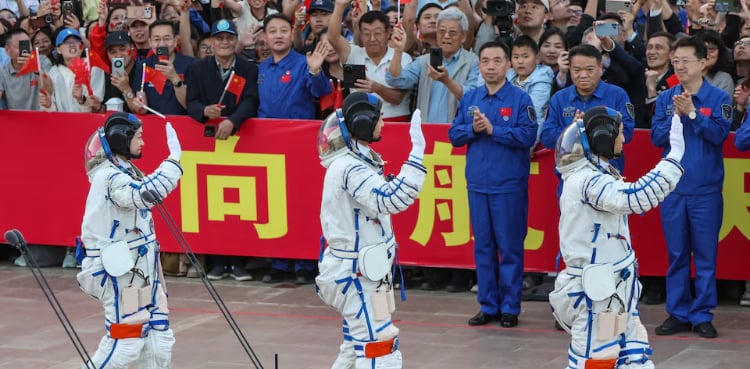
In a historic move, China has launched three astronauts to its space station, with one set to stay for a record-breaking year, as the country accelerates its pursuit of a crewed moon landing by 2030. The Shenzhou-23 vessel blasted off from the Jiuquan Satellite Launch Center in northwest China, marking a significant milestone in the country's space exploration endeavors.
The mission is particularly noteworthy, as it includes payload specialist Li Jiaying, a former Hong Kong police inspector, who becomes the first astronaut from the city to participate in a Chinese space mission. Joining Li are commander Zhu Yangzhu and pilot Zhang Yuanzhi, both seasoned astronauts from the People's Liberation Army's astronaut division. The year-long stint on the Tiangong space station will enable scientists to study the effects of prolonged space travel on the human body, a crucial aspect of China's lunar ambitions.
China's space program has been gaining momentum in recent years, with the country having sent astronauts to its space station nearly a dozen times. However, this latest launch comes at a time when the space race is heating up, with the United States warning about Beijing's alleged plans to colonize and mine lunar territory and resources. China has vehemently denied these claims, reiterating its commitment to peaceful space exploration.
The United States, meanwhile, is pushing ahead with its own lunar ambitions, with NASA aiming to achieve a crewed moon landing in 2028, two years ahead of China's deadline. The US space agency has already made significant strides, with four astronauts embarking on a historic trip around the moon as part of the Artemis II mission in April. Elon Musk's SpaceX has also been making waves, with a successful test flight of its next-generation Starship rocket, designed to enable more frequent satellite launches and future NASA missions to the moon.
As China works towards its 2030 moon landing goal, the country faces significant technical challenges, including the development of new hardware and software specifically designed for lunar missions. The transition from low-Earth orbit to the moon's surface poses considerable risks, and China must prove its mission readiness to ensure the safety of its astronauts. With less than four years to go, the clock is ticking, and the stakes are high.
Despite these challenges, China's space program has made tremendous progress, with the country having successfully launched several satellites, space stations, and even a lunar rover. The year-long mission on the Tiangong space station will provide valuable insights into the effects of long-duration space travel, paving the way for China's future lunar endeavors. As the space race continues to intensify, one thing is clear: the next few years will be crucial in determining the trajectory of space exploration and the players that will shape its future.
In the broader context of space exploration, China's ambitious plans are part of a larger trend, with several countries and private companies vying for a presence in space. The moon, in particular, is seen as a crucial stepping stone for further human exploration of the solar system, with its resources and strategic location making it an attractive target for nations and corporations alike. As China pushes ahead with its lunar ambitions, the world watches with bated breath, eager to see how this new era of space exploration will unfold.
For China, the successful completion of the year-long mission on the Tiangong space station will be a significant milestone, marking a major step towards its goal of establishing a human presence on the moon. With the country's space program continuing to advance at a rapid pace, it is likely that we will see significant developments in the coming years, as China works towards its ambitious goal of becoming a major player in the global space industry.
The implications of China's space program extend far beyond the realm of space exploration, with significant potential for technological innovation, economic growth, and international cooperation. As the country continues to push the boundaries of what is possible in space, it is likely that we will see a ripple effect, with benefits felt across a wide range of industries and sectors. Whether China achieves its goal of a crewed moon landing by 2030 remains to be seen, but one thing is clear: the country's space program is a force to be reckoned with, and its ambitions will have far-reaching consequences for the world.
In conclusion, China's year-long space mission is a significant step towards the country's goal of establishing a human presence on the moon. With the space race heating up, the world watches with interest, as China works towards its ambitious goal. The successful completion of this mission will mark a major milestone in the country's space program, paving the way for further exploration and innovation in the years to come.
Summary Points
China has launched three astronauts to its space station, with one set to stay for a record-breaking year
The mission is part of China's ambitious plans to achieve a crewed moon landing by 2030
The United States has warned about China's alleged plans to colonize and mine lunar territory and resources
NASA is pushing ahead with its own lunar ambitions, aiming to achieve a crewed moon landing in 2028
China faces significant technical challenges in developing new hardware and software for its lunar mission