India's 101st Ramsar Site: Glaw Lake in Arunachal Pradesh Sets New Milestone for Wetland Conservation
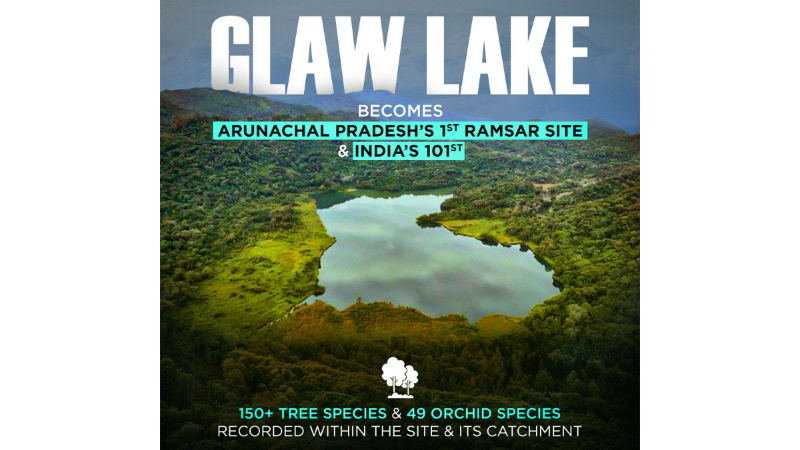
India has achieved a significant milestone in its wetland conservation efforts with the addition of Glaw Lake in Arunachal Pradesh as its 101st Ramsar Site. The Ministry of Information and Broadcasting made the announcement, highlighting the country's commitment to protecting its natural ecosystems while ensuring the livelihoods of local communities.
Located within the Kamlang Tiger Reserve and Wildlife Sanctuary, Glaw Lake is a pristine freshwater lake in the Eastern Himalayas, recognized as a biodiversity hotspot. The lake is fed by perennial mountain streams and is surrounded by dense tropical and sub-tropical vegetation, supporting a rich diversity of flora and fauna.
The designation of Glaw Lake as a Ramsar Site is a significant step towards biodiversity conservation, water and climate security, and sustainable livelihoods. Union Minister for Environment, Forest and Climate Change, Bhupender Yadav, announced the development, emphasizing the importance of expanding India's Ramsar network. The country has made remarkable progress in designating Ramsar Sites, from 26 in 2014 to 101 today, under the leadership of Prime Minister Narendra Modi.
The addition of Glaw Lake to the list of Ramsar Sites reflects India's continued commitment to conserving its invaluable wetland ecosystems. The lake is home to over 150 tree species and 49 orchid species, making it a unique and valuable ecosystem. The Ministry of Information and Broadcasting stated that every new Ramsar Site reinforces India's resolve to protect nature while safeguarding the interests of communities dependent on these vital ecosystems.
The Ramsar Convention, an international treaty signed in 1971, aims to conserve and manage wetlands of international importance. India has been a party to the convention since 1982 and has been actively working towards designating and conserving its wetland ecosystems. The designation of Glaw Lake as a Ramsar Site is a testament to the country's efforts towards achieving its conservation goals.
The conservation of wetlands is crucial for maintaining biodiversity, ensuring water security, and supporting local livelihoods. Wetlands provide a range of ecosystem services, including water filtration, flood control, and habitat for a variety of plant and animal species. The designation of Glaw Lake as a Ramsar Site will help to protect these ecosystem services and ensure the long-term conservation of the lake and its surrounding landscape.
In conclusion, the addition of Glaw Lake to the list of Ramsar Sites is a significant milestone for India's wetland conservation efforts. The country's commitment to protecting its natural ecosystems while ensuring the livelihoods of local communities is a step in the right direction. As India continues to expand its Ramsar network, it is essential to prioritize the conservation of its wetland ecosystems and work towards achieving its sustainable development goals.
Summary Points
Glaw Lake in Arunachal Pradesh has been designated as India's 101st Ramsar Site, marking a significant milestone in the country's wetland conservation efforts.
The lake is located within the Kamlang Tiger Reserve and Wildlife Sanctuary and is recognized as a biodiversity hotspot.
The designation of Glaw Lake as a Ramsar Site is a significant step towards biodiversity conservation, water and climate security, and sustainable livelihoods.
India has made remarkable progress in designating Ramsar Sites, from 26 in 2014 to 101 today, under the leadership of Prime Minister Narendra Modi.
The conservation of wetlands is crucial for maintaining biodiversity, ensuring water security, and supporting local livelihoods.
