Nepal's Domestic Air Travel Plummets Amid Soaring Fuel Costs
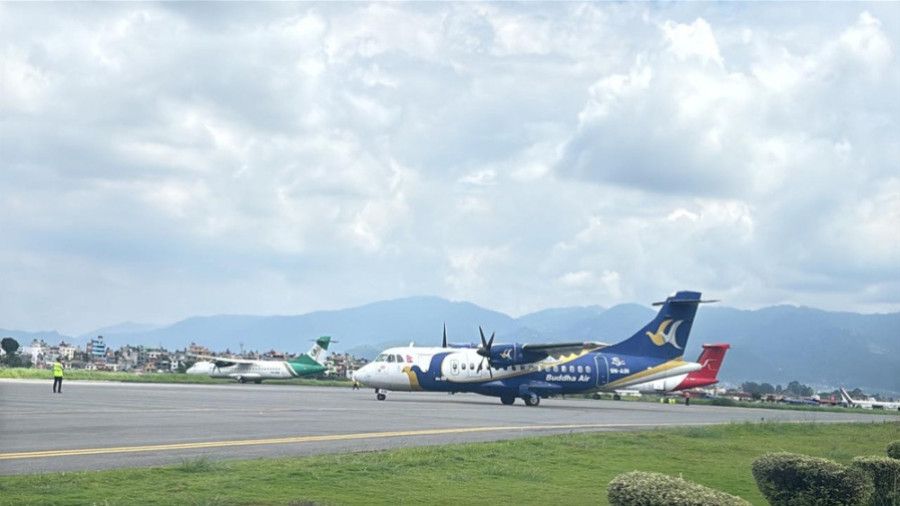
Nepal's domestic air travel sector is facing an unprecedented crisis due to the soaring prices of jet fuel, which has forced airlines to increase their fares by up to 40%. This drastic measure has resulted in a sharp decline in passenger numbers, with the total domestic passenger traffic falling by 12% in the fiscal year 2025-26. The decline was particularly severe during the final five months of the fiscal year, with monthly passenger numbers plummeting by as much as 34% in some periods.
According to data compiled by domestic airlines and the Civil Aviation Authority of Nepal (CAAN), the total number of domestic passengers fell from 4,557,634 in 2024-25 to 4,016,880 in 2025-26, a net loss of 540,754 travelers. The slump was felt across all major domestic carriers, including Buddha Air, Yeti Airlines, and Shree Airlines. Buddha Air recorded the largest numerical decline, losing 394,000 passengers, a 14% drop that accounted for nearly 73% of the industry's total decline.
The downturn has significant implications for the solvency of airlines, with industry leaders warning that the financial strain is threatening the very survival of some carriers. Pratap Jung Pandey, president of the Airlines Operators Association of Nepal (AOAN), described the situation as critical, stating that balance sheets across several airlines have turned negative, and many operators are finding it difficult to survive. The helicopter sector has also been affected, with flight hours falling by 20% to 30% among Nepal's 11 helicopter operators.
The decline in passenger numbers has affected nearly every major airport in the country, with Simara recording the steepest drop at 24%, followed by Bhairahawa at 22%. Traffic at Pokhara fell 11%, while Nepalgunj recorded a 16% decline. The decline in passenger numbers is attributed to the rising fuel costs, which have made air travel unaffordable for ordinary citizens and domestic tourists. Yubaraj Bista, chief business officer at Yeti Airlines, noted that the direct shock of the international energy crisis hit the domestic sector squarely, making air travel unaffordable for many.
Nepal's domestic aviation market typically handles about 4 million to 4.5 million passengers annually, with around 300,000 being foreign tourists, 300,000 being Indian visitors, and 100,000 being employees of government and non-governmental organizations. The remaining 3.9 million journeys are made by ordinary Nepalis traveling once or twice a year for family visits, medical treatment, or social obligations. When airfares rose, these occasional domestic travelers simply chose not to fly, exacerbating the decline in passenger numbers.
The crisis facing Nepal's domestic air travel sector is not an isolated incident, but rather a symptom of a broader global issue. Escalating geopolitical tensions, including joint US and Israeli military operations in Iran, have sent global aviation fuel prices higher, affecting airlines worldwide. The situation is further complicated by currency depreciation, which has increased operational costs for airlines. As the situation continues to unfold, it remains to be seen how Nepal's domestic air travel sector will recover from this unprecedented crisis.
In the short term, airlines will need to adapt to the new reality of higher fuel costs and find ways to mitigate the impact on their operations. This may involve increasing efficiency, reducing costs, and exploring alternative revenue streams. In the long term, the industry will need to work towards more sustainable and resilient business models that can withstand the volatility of the global energy market. For now, the future of Nepal's domestic air travel sector remains uncertain, as airlines and policymakers navigate this unprecedented crisis.
Summary Points
Nepal's domestic air travel sector has seen a 12% decline in passenger numbers due to soaring fuel costs
Airlines have increased fares by up to 40% to mitigate the impact of higher fuel costs
The decline in passenger numbers has affected all major domestic carriers, including Buddha Air, Yeti Airlines, and Shree Airlines
The helicopter sector has also been impacted, with flight hours falling by 20% to 30% among Nepal's 11 helicopter operators
The crisis facing Nepal's domestic air travel sector is part of a broader global issue, with escalating geopolitical tensions and currency depreciation contributing to higher fuel costs
