Rare White Macaque Sparks Conservation Efforts in Philippines' Sultan Kudarat
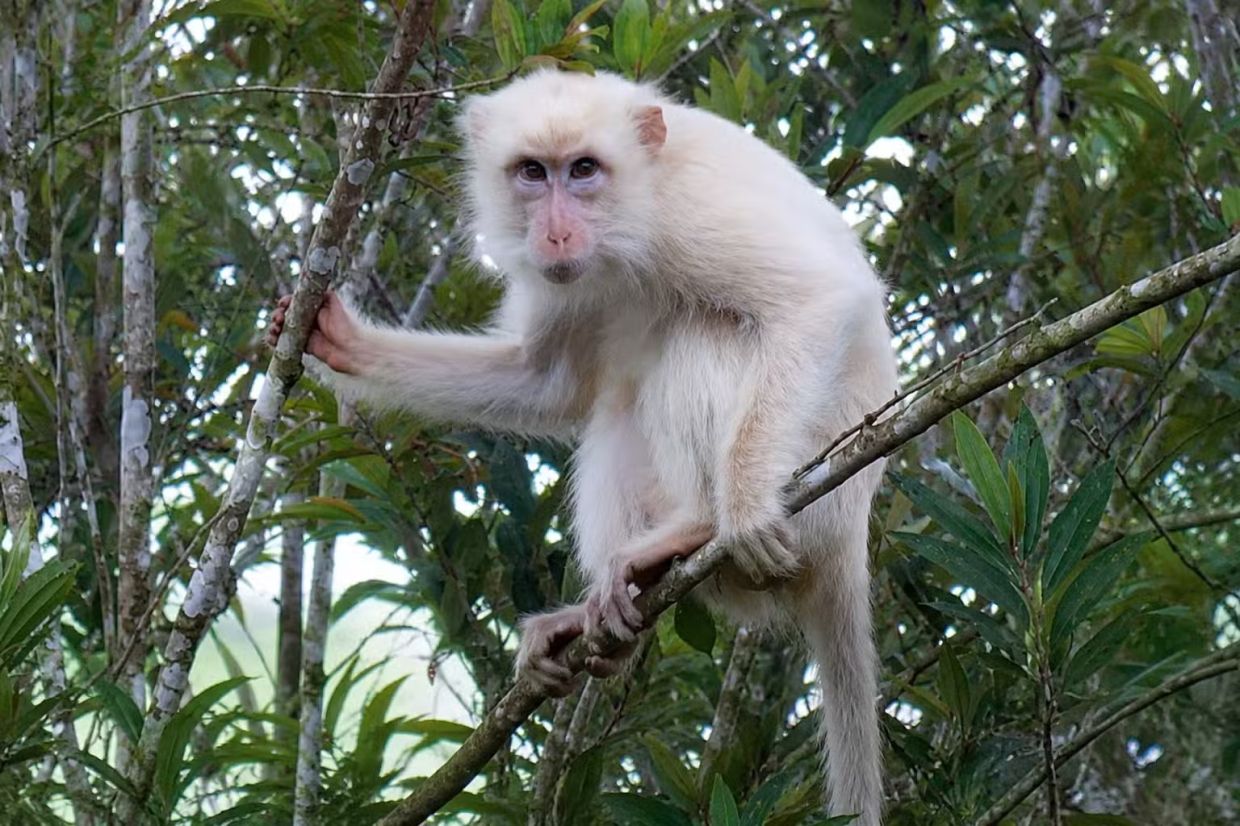
A rare white macaque has been making headlines in the Philippines, particularly in the province of Sultan Kudarat, where it has been spotted roaming the forested areas for nearly a decade. The unusual appearance of this macaque, believed to be a Philippine long-tailed macaque (Macaca fascicularis philippensis) with a pigmentation anomaly, has sparked both curiosity and conservation concerns among locals and wildlife experts alike.
Initially, the animal was presumed to have albinism, a condition characterized by the complete loss of melanin production, resulting in a lack of pigmentation in the skin, hair, and eyes. However, a field validation conducted by the Department of Environment and Natural Resources (DENR) Region XII found that the macaque had brown to dark brown eyes, suggesting that it may instead have leucism or another pigmentation condition. Leucism is a condition that reduces the amount of melanin in an animal's skin, hair, and eyes, but does not completely eliminate it.
The DENR, in collaboration with the local government of Senator Ninoy Aquino town, has taken steps to protect the monkey and restrict access to the area where it is often seen. This move aims to prevent the disturbance, hunting, capture, or collection of the animal, as well as to prevent exposing it to poaching and wildlife trafficking. The protection of this rare macaque is crucial, not only for its own conservation but also for the preservation of the surrounding ecosystem.
The Philippine long-tailed macaque is a subspecies of the long-tailed macaque (Macaca fascicularis), which is native to the Philippines and other parts of Southeast Asia. This species plays a vital role in maintaining the balance of the ecosystem, and its conservation is essential for the health of the forest. The DENR has reminded the public that all wildlife is protected under Republic Act No. 9147, or the Wildlife Resources Conservation and Protection Act, which prohibits hunting, capturing, collecting, possessing, transporting, trading, or disturbing wildlife without the required permits.
To minimize disturbance and protect the macaque's habitat, the municipal government has temporarily closed the area where the animal is frequently observed. The barangay government of Bugso is also preparing an ordinance that would institutionalize protection for the white macaque, its habitat, and the surrounding forest ecosystem. Additionally, the government plans to conduct tree-planting and habitat-restoration activities to strengthen biodiversity conservation and promote responsible ecotourism.
The conservation efforts for the rare white macaque are part of a larger initiative to protect the Philippines' rich biodiversity. The country is home to a vast array of unique and endemic species, many of which are found nowhere else in the world. The protection of these species and their habitats is crucial for maintaining the health of the ecosystem and preserving the country's natural heritage.
The story of the rare white macaque serves as a reminder of the importance of conservation and the need to protect the world's precious wildlife. As the DENR continues to monitor the habitat and strengthen coordination with local stakeholders, it is essential for the public to be aware of the importance of protecting wildlife and their habitats. By working together, we can ensure the long-term conservation of this incredible species and preserve the beauty and wonder of the natural world.
Summary Points
A rare white macaque has been spotted in the Philippines' Sultan Kudarat province, sparking conservation efforts
The animal is believed to be a Philippine long-tailed macaque with a pigmentation anomaly, possibly leucism
The DENR and local government have taken steps to protect the monkey and restrict access to its habitat
The protection of this rare macaque is crucial for its conservation and the preservation of the surrounding ecosystem
The Philippine government is working to promote responsible ecotourism and strengthen biodiversity conservation efforts
