Proposed 50-Mile Dam Between Russia and Alaska: A Radical Solution to Regulate Earth's Climate
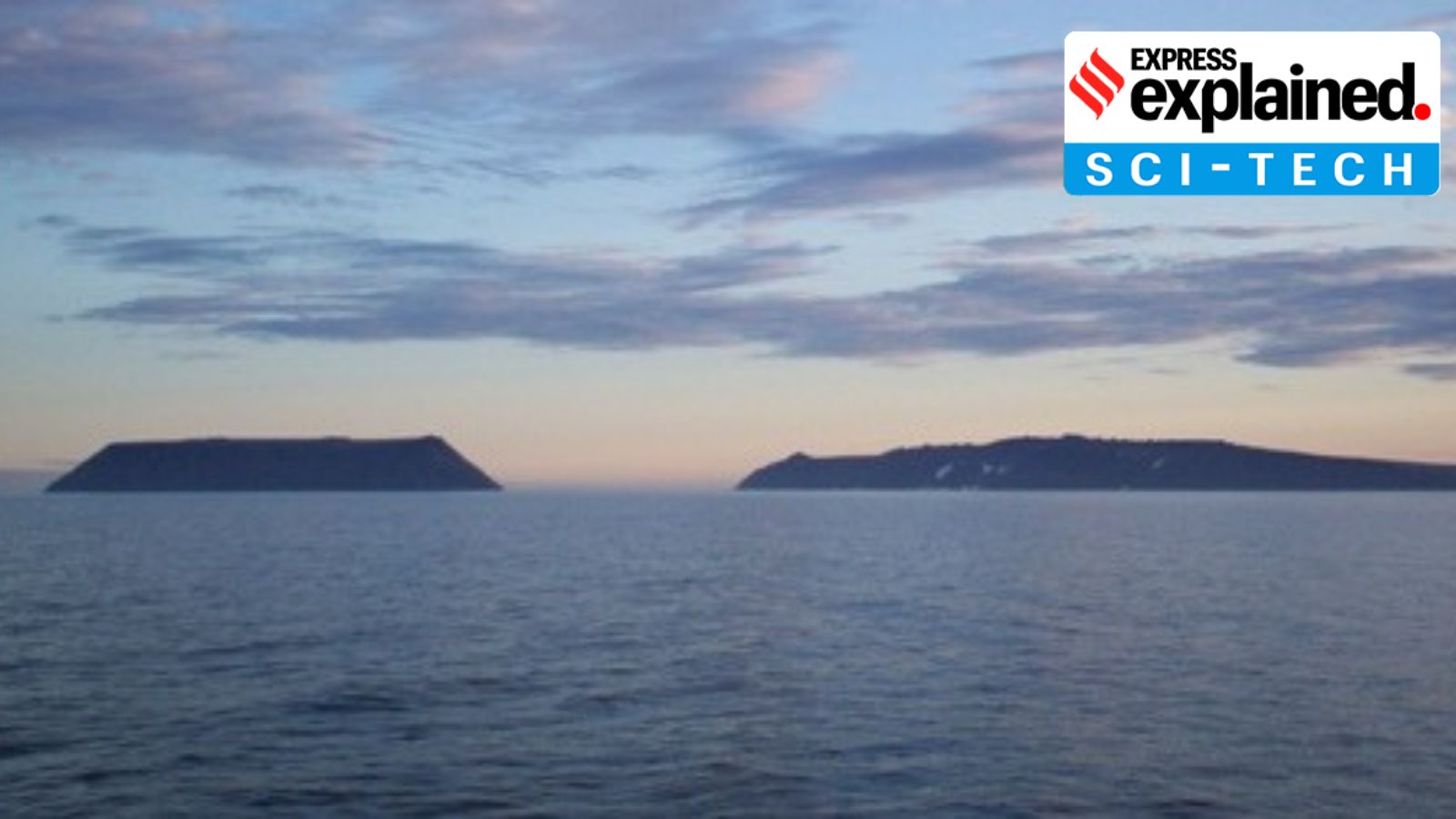
A recent study published in the journal Science Advances has sparked intense debate and discussion among climate scientists and experts. The proposal, put forth by two Dutch scientists, suggests building a 50-mile-long dam across the Bering Strait, the narrow waterway that separates Russia and Alaska. The primary goal of this ambitious project is to prevent the collapse of the Atlantic Meridional Overturning Circulation (AMOC), a network of ocean currents that plays a vital role in regulating Earth's climate.
The AMOC has been weakening over the past few decades, and there is growing evidence that human-caused global warming could eventually lead to its shutdown or significant slowdown. Such an event would have severe and far-reaching consequences on the weather patterns across multiple continents. The proposed dam is being considered as a potential solution to mitigate the effects of an AMOC collapse, although it is still in the early stages of research and development.
The Bering Strait, which is approximately 53 miles wide at its narrowest point, is a critical waterway that connects the Pacific and Arctic Oceans. The strait has played a significant role in the history of human migration, with many indigenous communities relying on it for trade, food, and cultural exchange. In the context of climate change, the strait's unique geography and oceanography make it an attractive location for a dam that could help regulate the Earth's climate.
According to Jelle Soons, one of the authors of the study, the proposed dam is a 'proof of concept' rather than a definitive action plan. Soons emphasizes that more research is needed to confirm the dam's effectiveness and to assess its feasibility, as well as its potential environmental side effects. However, he suggests that in a worst-case scenario, where human-caused warming leads to an AMOC collapse, a Bering Strait dam could be a viable option to mitigate the effects of climate change.
The concept of a massive dam across the Bering Strait is not entirely new. During the Cold War era, the Soviet Union and the United States considered various proposals for a dam or a tunnel across the strait, primarily for military and strategic purposes. However, these plans were never realized due to the enormous technical, financial, and environmental challenges involved.
While the idea of a 50-mile-long dam across the Bering Strait may seem radical and ambitious, it is essential to consider the potential benefits and drawbacks of such a project. On the one hand, a successful dam could help regulate the Earth's climate, mitigate the effects of an AMOC collapse, and provide a unique opportunity for international cooperation and collaboration. On the other hand, the construction of such a massive structure would require significant investment, pose substantial environmental risks, and raise complex geopolitical and social concerns.
In conclusion, the proposal for a 50-mile dam across the Bering Strait is a thought-provoking and potentially groundbreaking concept that warrants further research and discussion. As the world grapples with the challenges of climate change, it is essential to consider innovative and unconventional solutions that could help mitigate its effects. While the proposed dam is still in the early stages of development, it serves as a reminder of the need for continued investment in climate research, international cooperation, and sustainable development.
Summary Points
A proposed 50-mile dam across the Bering Strait could help regulate the Earth's climate by preventing the collapse of the Atlantic Meridional Overturning Circulation (AMOC).
The AMOC has been weakening over the past few decades, and human-caused global warming could lead to its shutdown or significant slowdown, resulting in severe weather patterns across multiple continents.
The proposed dam is still in the early stages of research and development, and more studies are needed to confirm its effectiveness and assess its feasibility and potential environmental side effects.
The Bering Strait's unique geography and oceanography make it an attractive location for a dam that could help regulate the Earth's climate.
The concept of a massive dam across the Bering Strait is not entirely new, but previous proposals were never realized due to technical, financial, and environmental challenges.
