Trump's New Tariffs: A Forced Labor Pretext or Genuine Concern?
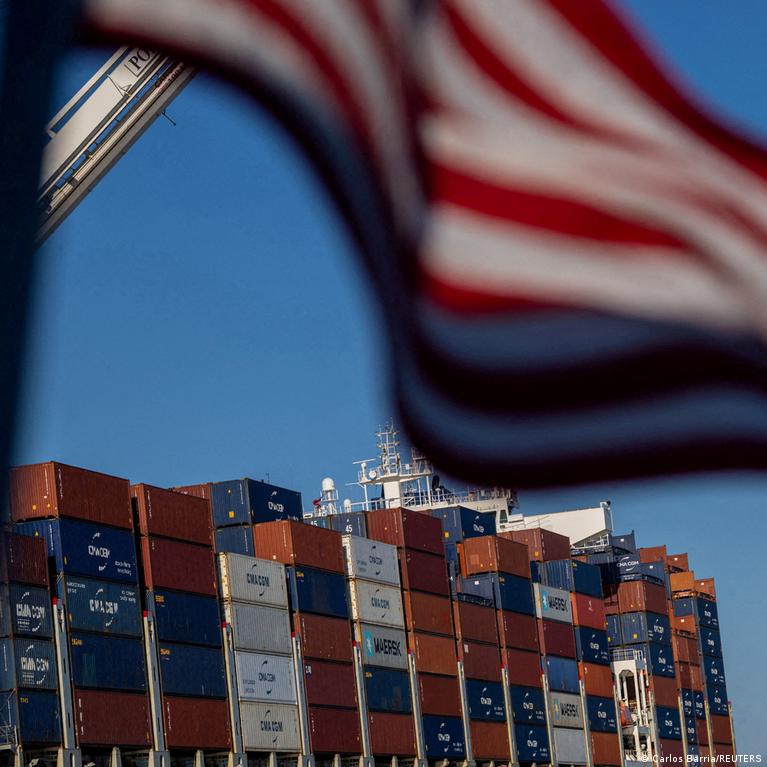
The Trump administration has introduced new tariffs on 60 economies, including the European Union, citing their handling of imported goods made with forced labor. This move has left the world puzzled, with many critics viewing it as a pretext to keep the tariff regime alive. The tariffs, which took effect on July 24, cover more than 99% of US imports and replace a temporary 10% global tariff that was due to expire.
The United States Trade Representative (USTR) stated that it had investigated major trading partners and found that they failed to impose and effectively enforce a prohibition on the importation of goods made through modern slavery. A 10% tariff will apply to countries like Argentina, India, Pakistan, and the UK that have adopted or committed to forced-labor import restrictions. The EU, Taiwan, Japan, South Korea, and Switzerland will face tariffs of either 10% or 12.5%, depending on the product.
Goods from 38 other countries will be subject to the higher tariff of 12.5%, including China, most of the Middle East, much of Latin America, Australia, New Zealand, and Russia. Exemptions include steel, aluminum, automobiles, civilian aircraft, rare earth minerals, and goods covered by the US-Mexico-Canada Agreement. The USTR noted that the US has banned imports made with forced labor for almost a century, adding that despite international consensus, the prevalence of forced labor persists worldwide and has even escalated in recent years.
Washington argues that foreign producers gain an unfair price advantage from the practice and that US workers cannot compete with forced-labor wages. However, many critics and analysts see the move as a legal workaround for Trump's broad tariff program, announced on Liberation Day, April 2, 2025, which the US Supreme Court struck down in February. The new forced labor tariffs were introduced under Section 301 of the Trade Act of 1974, a more established trade law that many analysts believe will be harder for courts to overturn.
Compared to parts of Africa, Asia, and Latin America, forced labor isn't a major issue within the 27-member EU, due to comprehensive labor laws and strong enforcement. The International Labour Organization (ILO) defines forced labor as work performed under the threat of penalty and without voluntary consent. While labor protections in the EU are comparatively strong, many imports still contain raw materials or components linked to forced labor elsewhere.
In December 2027, Brussels will introduce one of the world's strictest import bans, when no product tainted by forced labor will be allowed to enter, circulate, or leave the EU market. Reacting to the new tariffs, the EU's top diplomat, Kaja Kalla, expressed concerns about the impact on global trade and the effectiveness of the measures in addressing forced labor. As the world navigates this complex issue, one thing is certain – the implications of Trump's new tariffs will be far-reaching, and their impact on global trade and human rights will be closely watched.
The use of forced labor is a serious issue that affects millions of people worldwide. According to the ILO, there are approximately 40 million victims of modern slavery globally, with 25 million in forced labor and 15 million in forced marriage. The ILO also estimates that forced labor generates an estimated $150 billion in illegal profits each year. The issue is not limited to any one region or country, and it is a problem that requires a collective effort to address.
The introduction of the new tariffs has sparked a debate about the effectiveness of trade policies in addressing human rights issues. While some argue that tariffs can be an effective tool in pressuring countries to improve their labor standards, others argue that they can have unintended consequences, such as hurting the very people they are intended to help. As the world grapples with the issue of forced labor, it is clear that a comprehensive approach is needed, one that involves governments, businesses, and civil society working together to address the root causes of the problem.
Summary Points
The Trump administration has introduced new tariffs on 60 economies, including the European Union, citing their handling of imported goods made with forced labor.
The tariffs cover more than 99% of US imports and replace a temporary 10% global tariff that was due to expire.
A 10% tariff will apply to countries like Argentina, India, Pakistan, and the UK that have adopted or committed to forced-labor import restrictions.
The EU, Taiwan, Japan, South Korea, and Switzerland will face tariffs of either 10% or 12.5%, depending on the product.
The use of forced labor is a serious issue that affects millions of people worldwide, with approximately 40 million victims of modern slavery globally.